Shanghai 3-Day Itinerary 2026: A Metro-by-Metro Plan for First-Time Visitors
A 3-day Shanghai itinerary for first-time visitors: exact metro lines, ticket prices, booking rules, where to stay, and what each day actually feels like.
🌏 East China
🗓️ Suggested: 3 days
Show this to your driver
One day for the skyline the city shows you. One for the neighbourhoods it lives in. One for the working north bank it keeps to itself.
Most Shanghai itineraries give you a list. This one gives you a sequence — the order that actually works on the ground, with the metro exits, the ticket prices, and the two or three stops you should quietly drop if you want to enjoy yourself.
Three days is not enough for Shanghai. It is, however, exactly enough to understand it: one day for the skyline the city shows you, one for the neighbourhoods it lives in, and one for the working north bank it mostly keeps to itself. Do them in that order and the city makes sense. Do them in the wrong order and you will spend three days taking photographs of the same river.
Quick answer Day 1 is Nanjing Road, Lujiazui and the Bund — the postcard. Day 2 is Wukang Road, the French Concession lanes and Yuyuan — the living room. Day 3 is Hongkou: 1933 Old Millfun, Duolun Road, Luxun Park and M50 — the workshop. Budget ¥900–1,100 (≈US$125–153) per person for three days, excluding hotels.
Jump to: Plan at a glance · Before you go · Day 1 · Day 2 · Day 3 · Cost · Where to stay · Where to eat · What we skip
The plan at a glance
| Day 1 — The postcard | Day 2 — The living room | Day 3 — The workshop | |
|---|---|---|---|
| Character | Stone facades, glass towers, river light | Plane trees, lane houses, garden walls | Concrete ramps, 1930s writers, art studios |
| Start | People’s Square (1/2/8) | Wukang Road (10/11) | People’s Square (1/2/8) |
| End | The Bund, after dark | Yuyuan bazaar, after dark | M50, then Jing’an for dinner |
| Walking | 6–7 km | 8–9 km | 6 km |
| Paid entries | ¥180–199 (≈US$25–28) | ¥40 (≈US$6) | ¥0 |
| Best hour | 18:30, the Bund | 08:30, Wukang Rd | 10:00, 1933 |
A note on the order. Most Chinese-language itineraries put the Bund first and Lujiazui second, then send you back across the river at night. You can do that, but you will cross the Huangpu twice and see the same view from the wrong side at the wrong light. The sequence below crosses once, gets you to Lujiazui for the last hour of daylight, and puts you back on the Bund just as the facades light up. Same six places, better order.
Before you go: six things that decide whether this trip feels easy
Not tips. Variables — get these six right and the rest of the trip runs itself.
1. Your credit card is your metro ticket
Since June 2025, every fare gate on the Shanghai metro accepts contactless Visa, Mastercard, American Express, JCB and UnionPay cards directly. You tap the reader on the way in, tap again on the way out, and the fare is calculated automatically. No app, no queue at the ticket machine, no Chinese phone number.
Two conditions: your card must support contactless payment, and contactless small-amount payment without a PIN must be switched on with your bank before you travel. If a gate rejects you, staff at the service window can usually tell within seconds whether it is the card or the setting.
Fares run ¥3–7 (≈US$0.4–1.0) for almost everything in this itinerary. A 24-hour metro pass costs ¥18 (≈US$2) and a 72-hour pass ¥45 (≈US$6) — worth it only if you ride more than five times a day, which you will not on this route.
2. Monday is a trap
Shanghai’s attractions do not share a closing day, and the pattern will catch you out:
- Yuyuan Garden — closed Mondays
- Shanghai Museum, People’s Square — closed Mondays
- Shanghai Museum East, Pudong — closed Tuesdays
- Most M50 galleries — closed Mondays
If your three days include a Monday, move Day 2 off it. Day 3 survives a Monday better — though M50 will be half asleep.
3. Google Maps will fail you
Google Maps works poorly in mainland China: patchy data, wrong walking times, and it cannot see inside most buildings. Apple Maps works properly and is the easiest option if you carry an iPhone. Otherwise download Amap, which has an English mode and the most accurate metro exit data in the country.
The metro is the exception. Every sign, announcement and ticket machine is in English as well as Chinese. You will not get lost underground.
4. Set up Alipay before you land
You can survive this itinerary on a credit card, but you will be excluded from the small stuff — the ¥2 (≈US$0.3) ferry, a bowl of noodles, a shared bike. Alipay — or WeChat Pay, which works the same way — accepts foreign cards and takes about ten minutes to configure. Do it at home, on your own wifi, not in the arrivals hall.
5. Sunset is the schedule
In spring and autumn Shanghai’s sun sets between 17:30 and 18:30, and the Bund’s floodlights come on within about twenty minutes of it. They are switched off around 22:00. That single fact dictates the back half of Day 1: be in Lujiazui for the last of the daylight, be on the Bund by 18:30.
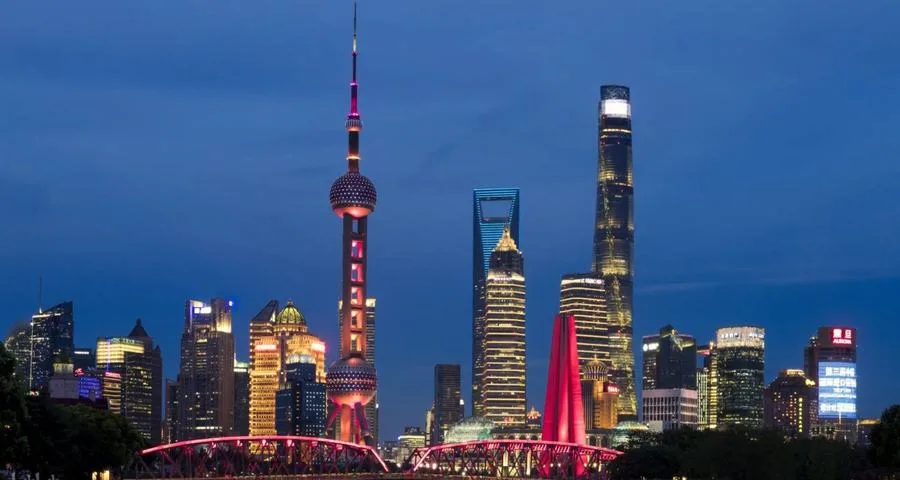
If your dates fall in the first week of October, National Day crowds turn the Bund promenade into a slow-moving queue. Shift the whole itinerary a week later and you lose nothing.
6. Two lines do all the work
Almost every stop in this itinerary sits on two metro lines. Line 2 threads People’s Square, East Nanjing Road and Lujiazui. Line 10 threads Yuyuan, Xintiandi and the French Concession. Learn those two and you can put the map away; everything else you will ride is a two-stop connector between them.
Line 2 is also the most crowded line in the city. Between 08:00 and 09:30, and again from 17:30 to 19:00, you will be pressed against the door, and at People’s Square you may watch two trains leave without you. Move your start time thirty minutes in either direction and the problem disappears.
Taxis are the other trap. Around Lujiazui, the Bund and Nanjing Road at peak hours, the road is one lane of standing traffic and a taxi is slower than walking to the station. DiDi — the local ride-hailing app, which runs in English — is cheap, most hops here ¥15–30 (≈US$2–4), but the driver cannot stop on the Bund promenade or inside a Tianzifang lane. Give a building name, not a street name.
Buses are cheap, comprehensive, entirely in Chinese, and they loop. Not worth learning for three days. The ferry is the exception pointing the other way: ¥2 (≈US$0.3), and the only crossing in the city that doubles as a viewpoint.
The postcard
Nanjing Road · Lujiazui · The Bund
What this day feels like. You start in the middle of a city that looks like every other big city, and you end it standing at a railing while two completely different centuries face each other across 400 metres of brown water. That is the whole trick of Shanghai, and it is worth doing properly rather than quickly.
The morning half is the least interesting half, and that is fine — it is a warm-up. Nanjing Road is a shopping street, not a sight. Walk it for the sensation of a Chinese commercial street at full volume: shop speakers, delivery scooters threading through the crowd, a man selling sugar-fried chestnuts out of a drum. Then the street narrows, the buildings change from glass to stone, and you are on the Bund without quite noticing the transition.
09:00 — People’s Square
Free · 20 min · no booking
Start above ground, not underground. People’s Square is a large, slightly austere public park built on what was once a colonial racecourse, and it tells you something about the city before you have seen anything: Shanghai knocks things down and puts a park on top, then builds a museum, a theatre and an opera house around the edges. Look for the retirees doing taichi near the north side and the men with bird cages along the path. Both are genuine, and both have been happening here for decades.
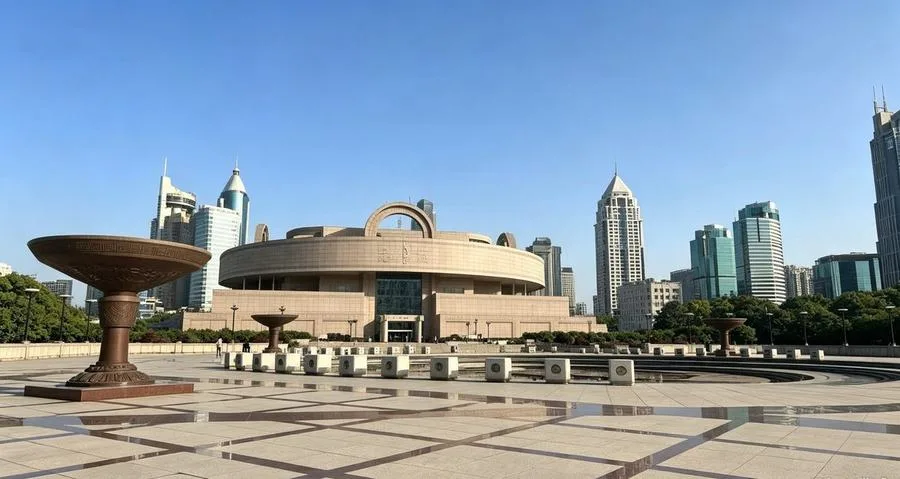
Free, open all day. The Shanghai Museum sits at the south edge, but check before you go: since July 2026 the People's Square building shows one thing only — the Americas exhibition, which runs to November 2027 — and every visitor must buy a ticket (¥148 (≈US$21), ¥74 (≈US$10) students). The permanent bronzes and ceramics have moved to the East Hall in Pudong: free, no booking, closed Tuesdays.
09:30 — Nanjing Road
Free · 60–75 min
Walk east, not west. The pedestrianised stretch runs about 1.2 km from People’s Square down to Henan Middle Road, and the further east you go, the older the buildings get. Around the midpoint, look up: the art deco blocks above the shopfronts are 1930s originals wearing modern signage, which is the most Shanghai thing about the street.
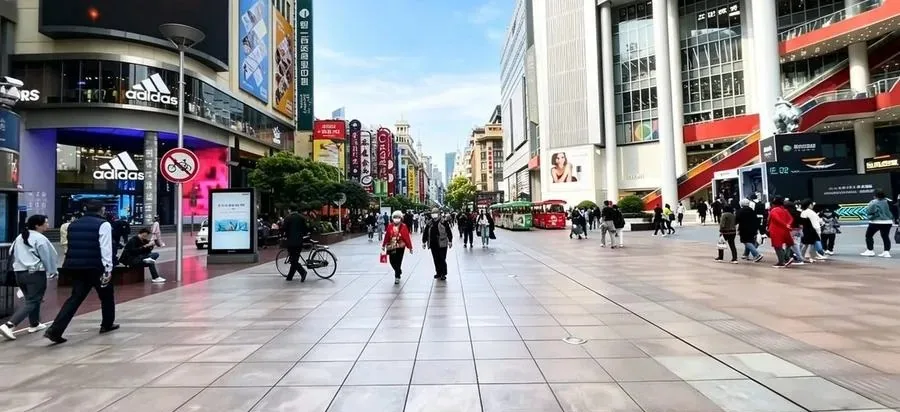
Do not buy anything in the first 500 metres, and do not buy souvenirs anywhere on this stretch at all — the same box of tea is a third of the price in the supermarket one street back. The further east you walk, the cheaper and better the food gets.
If you want a sit-down breakfast, duck into the food hall of the No. 1 Department Store and order whatever the longest queue is for. If you want the pastry Shanghai queues for, walk five minutes west first: the Park Hotel bakery on Nanjing West Road sells butterfly pastries by weight and runs out before noon.
Walk, don't ride. The sightseeing tram charges ¥40 (≈US$6) for 1.2 km — roughly the price of lunch. Metro East Nanjing Road (Lines 2/10) is at the east end if you need to bail. Toilets are in the department stores; carry tissues.
11:00 — The Bund, in daylight
Free · 45 min · open 24h
Almost everyone photographs the Bund at night. Almost nobody looks at the buildings. Do it now, while the light is flat and the facades are legible: the Customs House at No. 13 with its clock tower, the Peace Hotel at No. 20 with its green pyramid roof, the former HSBC building at No. 12 with the mosaic dome you can walk into during banking hours. This is a 1.5 km run of buildings put up between 1900 and 1930 by people who assumed they were building a permanent European city on the wrong continent. They were wrong, and the buildings are still there.
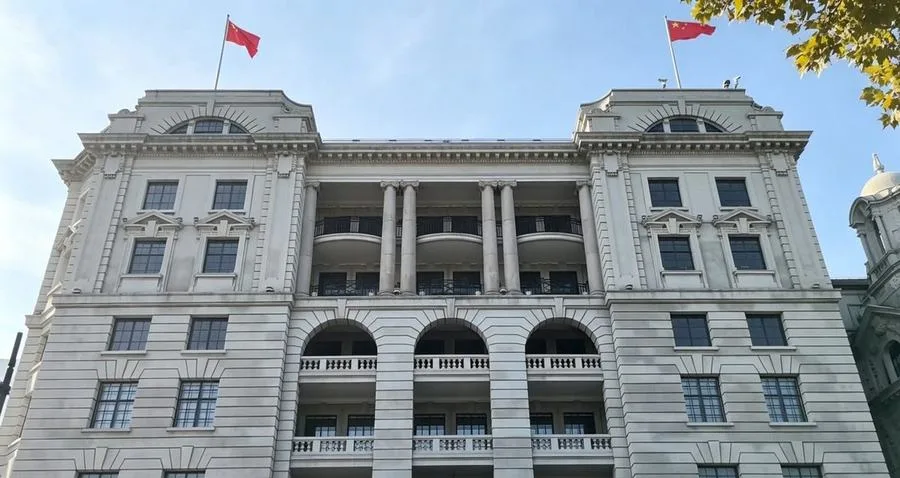
Walk north to the Waibaidu steel bridge at the end, then turn around. That is the full length.
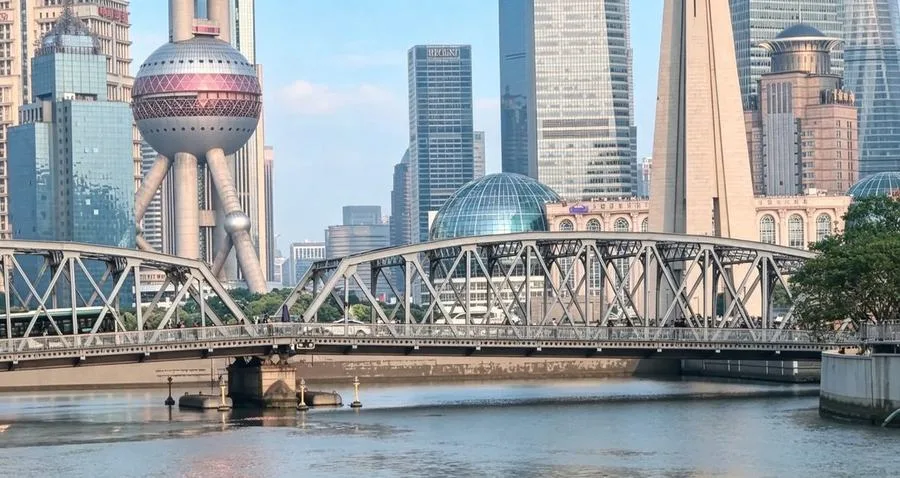
Free, no booking. The promenade is elevated; the road below is a six-lane artery you cannot cross casually. Best toilets: the Peace Hotel ground floor, the Bund Finance Centre. Ignore anyone who approaches you offering a "tea ceremony" or an "art student exhibition" — both are scams that end with a bill.
12:30 — Lunch, then across the river
Eat on the Puxi side before you cross. Two reliable options within five minutes of the Bund: the basement food hall of the Bund Finance Centre (¥50–80 (≈US$7–11), fast, air-conditioned, no English menu but pictures), or the noodle shops on Yunnan South Road one block inland (¥30–45 (≈US$4–6) for a bowl of scallion oil noodles, which is the dish Shanghai is actually proud of).
14:00 — Crossing to Lujiazui
¥2 (≈US$0.3) by ferry / ¥3 (≈US$0.4) by metro · 5 min
Here is the first real decision of the trip. The obvious route is the Bund Sightseeing Tunnel — ¥50 (≈US$7) one way, ¥70 (≈US$10) return — a slow, garish light show in a glass capsule under the river. It is fun for children and faintly ridiculous for adults, and it costs twenty-five times the ferry.
Take the ferry instead. The Jinling East Road dock is at the south end of the promenade; the crossing to Dongchang Road takes five minutes, costs ¥2 (≈US$0.3), and gives you the best view of both skylines that money can buy at that price. You stand at the rail with commuters and delivery riders, which is a more honest introduction to the city than a fibre-optic tunnel.
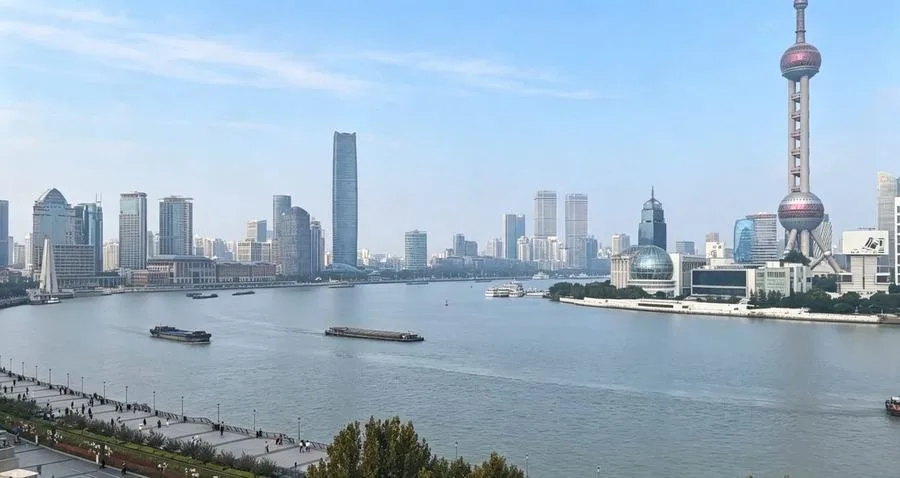
Jinling East Rd ferry, ¥2 (≈US$0.3), pay by Alipay QR at the gate. Crossings every 10–20 minutes until roughly 22:30. Or Metro Line 2 from East Nanjing Road to Lujiazui, one stop, ¥3 (≈US$0.4) — it drops you inside the tower cluster.
14:30 — Lujiazui
Free to walk · 30 min
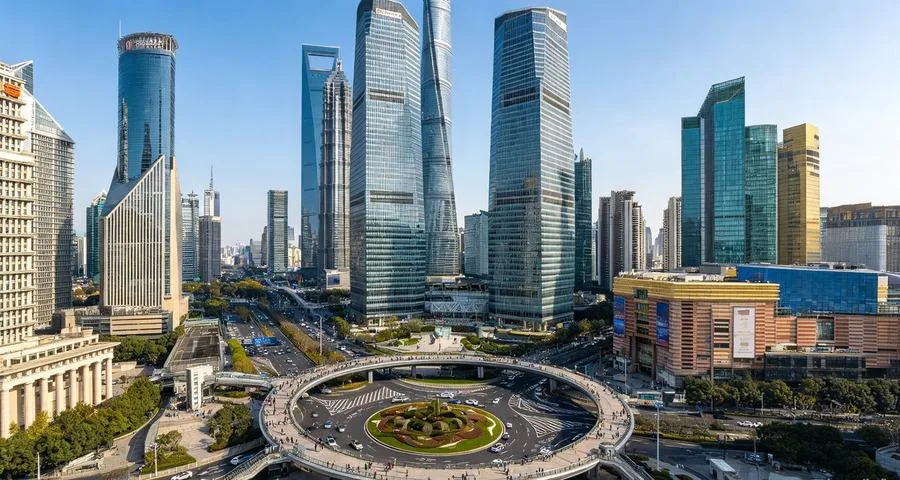
Lujiazui is what happens when a government decides in 1990 that a rice field should become a financial district, and it works — which is the unsettling part. The scale is not human. The buildings do not have front doors so much as intake vents. Walk the circular pedestrian skybridge above the traffic circle and look up: the Oriental Pearl, the Jin Mao, the bottle-opener of the World Financial Center and the twisted Shanghai Tower, all within 300 metres.
This is the one place in the itinerary where you should let yourself be a tourist. Stand in the middle of the bridge with your phone out. Everyone does.
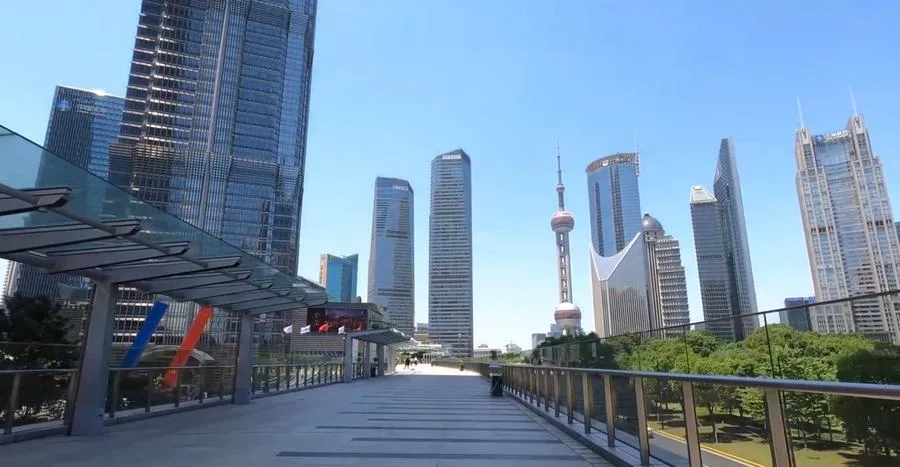
Two better photographs, both free. Walk south five minutes to the riverside promenade, where the whole Bund fits in one frame across the water with nothing in the way. Then set the phone low on Lujiazui Ring Road, at street level between the towers, and shoot straight up — the four buildings converge and the sky becomes a small triangle, which is the shot the postcards use.
15:15 — IFC Mall
Free · 10:00–22:00 · 45 min
The IFC is where you go when the heat or the rain wins. Two towers of luxury retail joined by a mall with excellent air conditioning, clean toilets and a rooftop terrace on the Lujiazui side. The basement supermarket (Ole’) is genuinely worth ten minutes if you want to see what a Chinese upper-middle-class grocery basket looks like — imported cheese at €12, live seafood, a wall of tea.
Free entry. The L3 terrace has a clear view of the Oriental Pearl without the tower ticket. Coffee ¥35–45 (≈US$5–6).
16:30 — Oriental Pearl Tower, or Shanghai Tower. Pick one.
This is the most useful piece of advice in this article: you do not need both, and which one you choose depends on what you want to look at.
| Oriental Pearl | Shanghai Tower | |
|---|---|---|
| Price | ¥199 (≈US$28) (2 spheres) ¥299 (≈US$42) (3 spheres) | ¥180 (≈US$25) (118F) |
| Height | 259 m glass floor, 263 m deck | 546 m, 55-second lift |
| Hours | 09:00–21:30 last entry 21:00 | 08:30–22:00 last tickets 21:30 |
| Booking | Same-day at the counter or in-app; online also available | Same-day at the counter or in-app; online also available |
| The view | Everything except the tower you are standing in | Everything, including the Pearl |
| The feeling | You are inside the icon. The glass floor at 259 m is genuinely unnerving. | You are above the weather. On a clear day you can follow the river out toward the estuary. |
Choose the Oriental Pearl if you want the experience of standing inside the building you have seen in photographs since childhood, and if you have children with you. Choose Shanghai Tower if you want the photograph, or if you are visiting on a hazy day — at 546 m you are often above the haze line that flattens everything at 260 m.
Either way, you can buy when you arrive — at the counter or in the official app. Both towers sell same-day tickets; booking online only skips the queue at peak times. Bring your passport; the gate reads it for real-name registration as part of entry.
Both decks are better after dark than in daylight, and they are not the same view. Below: what you actually get from each, photographed after the 18:20 switch-on.
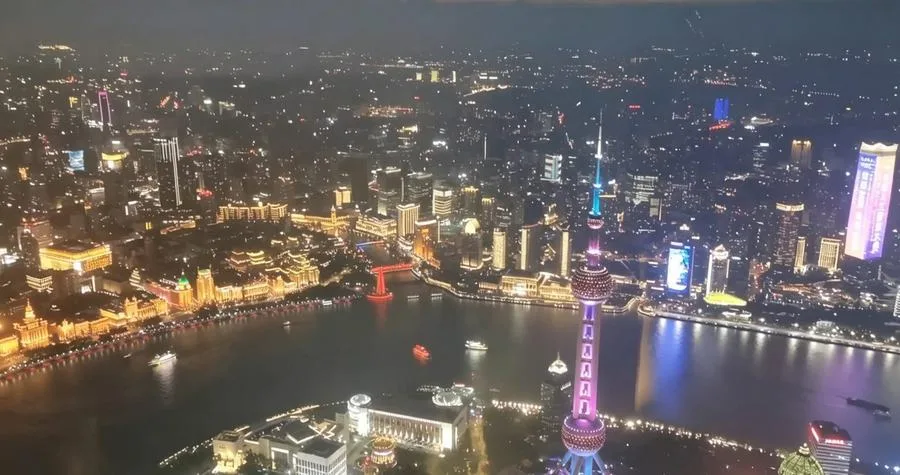
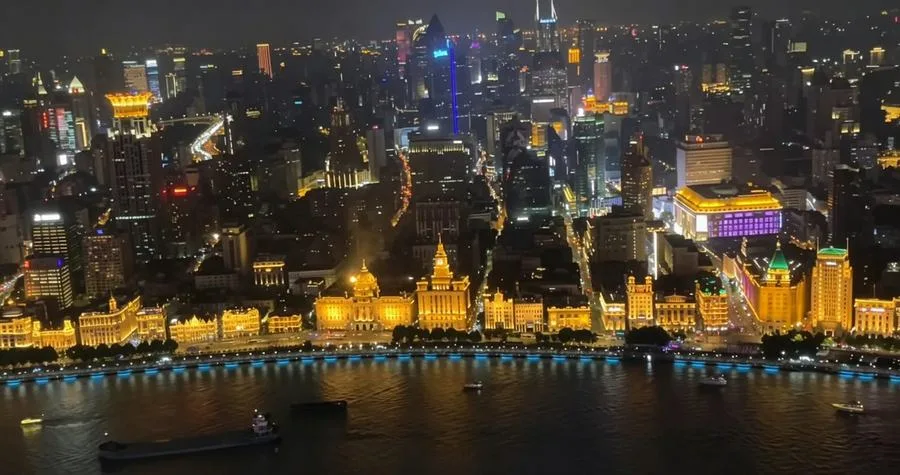
Price does not change with the hour. If the night view is the point, move this stop to 17:45 and stay for the switch-on — the trade is that you give up watching the Bund turn amber from the ground at 18:20, which is the best free thing in this city.
18:00 — Back to the Bund for the light
Free · lights on ~18:20 · off ~22:00
Cross back by ferry or Line 2 and be on the promenade by 18:30. The transformation takes about fifteen minutes and it is genuinely dramatic: the stone facades go amber from below, the Lujiazui towers start cycling through colour, and the river turns into a moving mirror. Walk south from the Peace Hotel towards Shiliupu — the crowd thins and you get the skyline at a distance where it fits in a frame.
If the promenade is shoulder-to-shoulder — it will be on a Saturday — walk twenty minutes north instead, to the Waibaidu steel bridge at the top of the Bund. From the middle of it you get the lit facades on one side and the tower cluster on the other, a fraction of the crowd, and the only place in the city where you can photograph both banks without turning around.
If you want the river from the water rather than the bank, the Huangpu cruise leaves from Shiliupu Wharf: 45–50 minutes, ¥120 (≈US$17) by day and ¥150 (≈US$21) at night in peak season, ¥100 (≈US$14)/¥120 (≈US$17) in the off-season (roughly late November to late February). It is worth doing once, and it is the only item on Day 1 I would call optional rather than essential.
Cruise queues at Shiliupu get long after 19:00 — buy online or go at 18:00. There is no dress code and no need for a "VIP deck".
Where to eat on Day 1
Shanghai eats well and cheaply, once you know which two blocks to stand on. Near the Bund, avoid restaurants with photographs of the skyline on the menu — they charge for the view. Two blocks inland on Fuzhou Road or Yunnan South Road you get the same food for a third less. For something better, walk 15 minutes north to Rockbund, where restaurants on Yuanmingyuan Road sit inside 1920s buildings and cost ¥150–250 (≈US$21–35) a head.
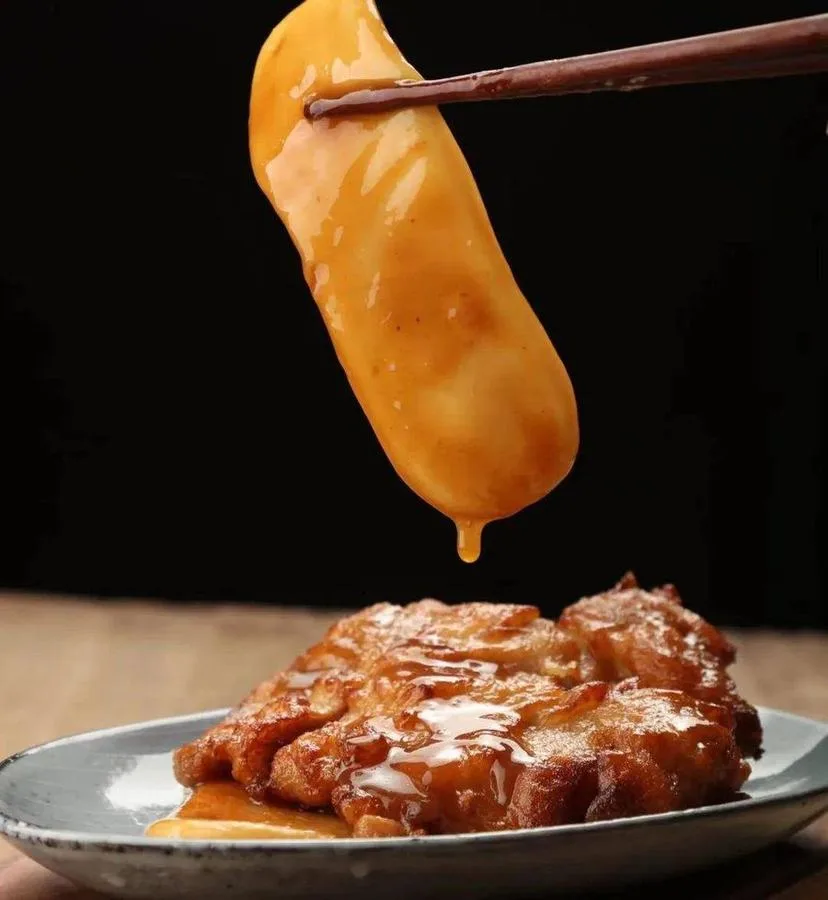
Yunnan South Road is worth naming, because it is the closest thing Shanghai has to a preserved old snack street: Xiao Shaoxing for cold poached chicken, Xian De Lai for pork chop over rice cake, Da Hu Chun for the thick-skinned, juicy style of shengjian. All three are decades old, all three are cheap (¥25–50 (≈US$3–7)), all three have a queue at noon, and none of them has an English menu — point at what the next table has.
One more, five minutes from where Day 1 starts: Huanghe Road, which begins at the north-west corner of People’s Square and became famous all over again after the television drama Blossoms. Jia Jia Tang Bao does soup dumplings with a thinner skin than Nanxiang’s, and the rest of the street is old Shanghainese restaurants with laminated menus and fluorescent light. Go at 11:30 or after 13:30; at 12:00 the queue is on the pavement.
The living room
Wukang Road · Sinan Mansions · Tianzifang · Xintiandi · Yuyuan
What this day feels like. Day 1 is a city performing. Day 2 is the city at home. The French Concession — a wedge of the old foreign concession still shaded by plane trees planted in the 1920s — is the part of Shanghai that foreigners who live here love and tourists usually rush through. Walk it slowly and you notice: laundry on the balconies of 1920s apartment blocks, an old man selling calligraphy brushes from a folding table, three coffee shops within 50 metres that all charge ¥38 (≈US$5) and all have customers.
The afternoon moves east and back in time, from the concession to the walled old city, which is 700 years older and ten times louder. The contrast at the end of the day is the point of the day.
One change from the usual order: Sinan Mansions comes before Tianzifang, not after. It is 20 minutes south of Wukang Road on foot, it is where you want to eat lunch, and putting it there turns the afternoon into a single west-to-east line that ends at Xintiandi — where Line 10 runs straight to Yuyuan in six minutes.
08:30 — Wukang Road
Free · 2 hrs · no booking
Come early. By 11:00 the intersection of Wukang Road and Huaihai Middle Road is a photo queue, and by noon it is unpleasant. At 08:30 it is just a street: plane trees meeting overhead, five-storey apartment blocks with arched windows and iron balconies, residents walking dogs, a wet market opening up on a side street. It smells of damp pavement and the oil from a lane breakfast stall, and for the first half hour the city is simply going about its morning — not performing for you, not selling to you, just existing. That is the version of Shanghai you came for.
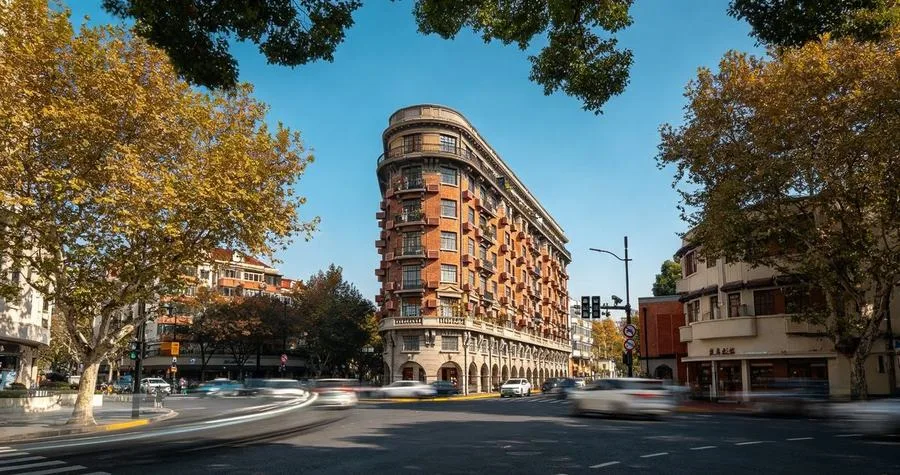
The building everyone photographs is Wukang Mansion, the flat-iron block at the fork where six roads meet. Be clear about one thing before you go: it is a private residential building and you cannot enter it. There is no viewing platform and no ticket. You photograph it from the pavement opposite, like everyone else, and then you keep walking — which is the actual point. The two hours are for the side streets: Anfu Road for small design shops, Wuyuan Road for coffee, Hunan Road for the wet market.
Free, no booking, open all day. Coffee ¥30–45 (≈US$4–6). The only toilets are in cafés, and you are expected to buy something.
11:00 — Sinan Mansions
Free · 75 min incl. lunch
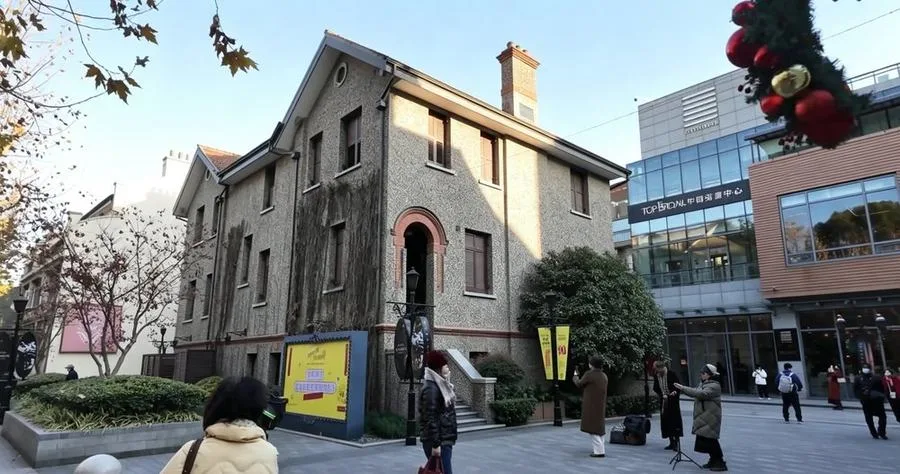
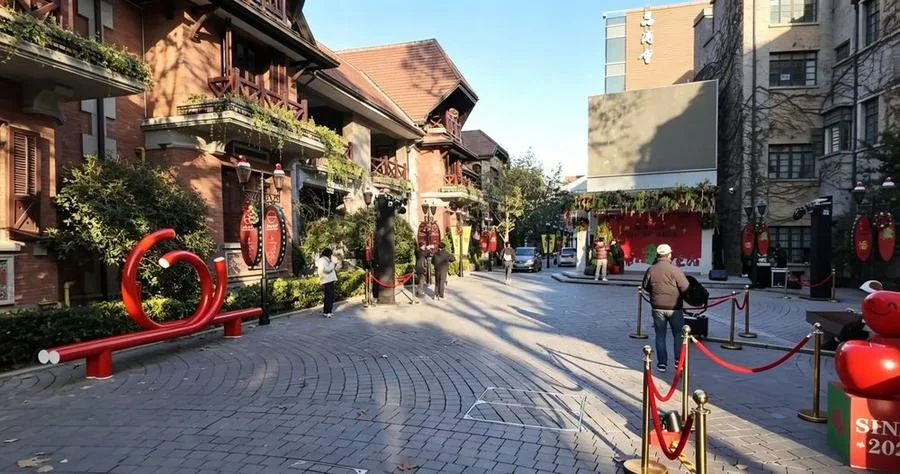
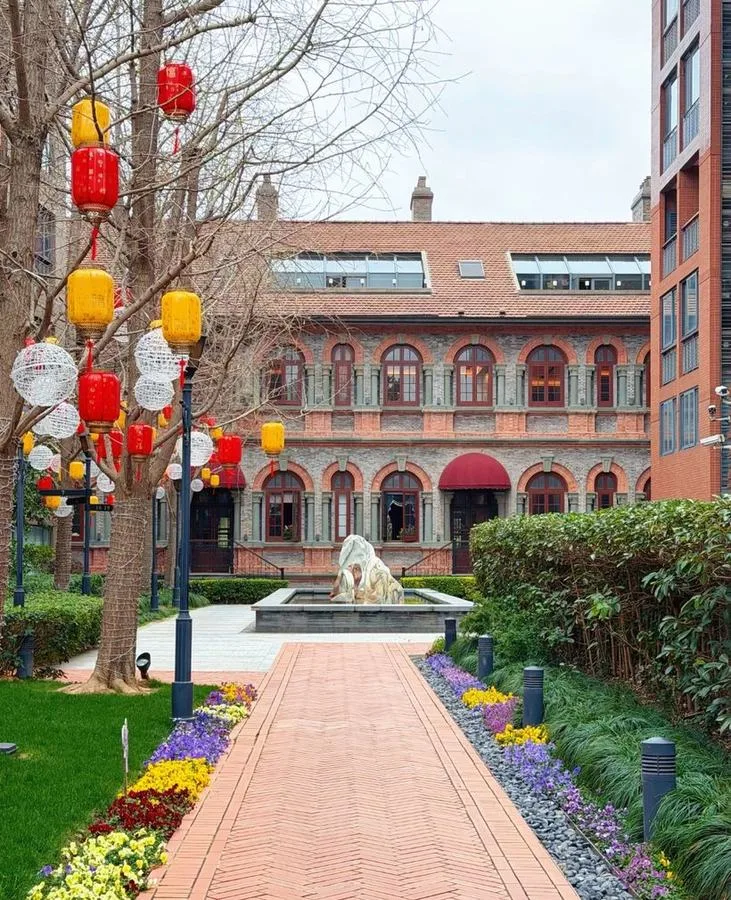
A block of 51 villas built between 1920 and 1930 for the city’s doctors, bankers and officials, now restored and rented out as restaurants, galleries and a boutique hotel. It is manicured, expensive and slightly artificial — and still worth an hour, because it is the only place in the city where you can walk freely among intact garden villas of that period. The lane between the buildings is quiet in a way central Shanghai almost never is.
Have lunch here. The restaurants are not cheap by Chinese standards (¥120–200 (≈US$17–28) a head) but the setting is the reason you came.
12:45 — Tianzifang
Free · 75 min
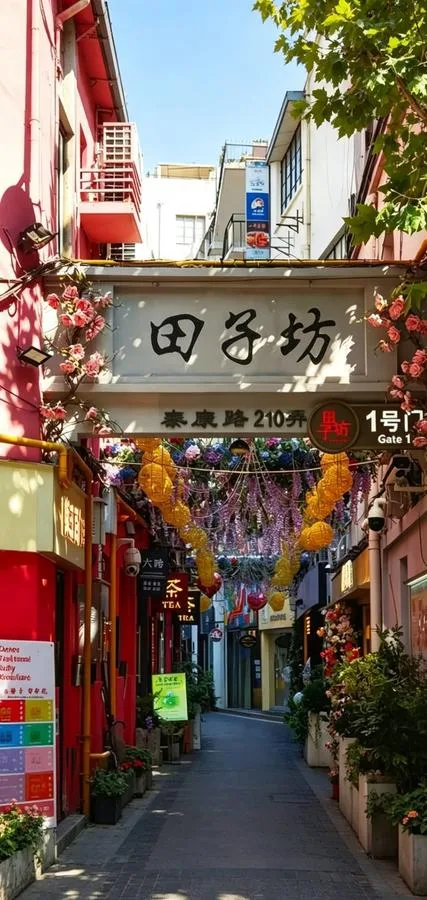
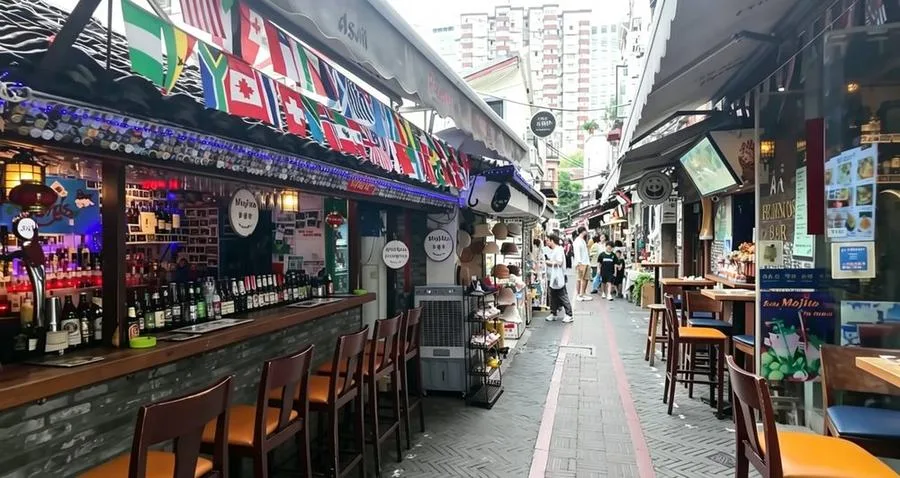
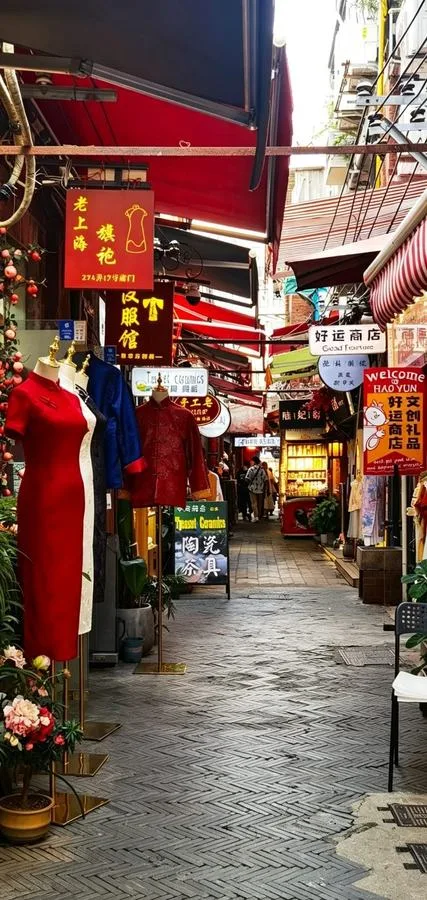
Six lanes of 1930s shikumen houses converted into a maze of small shops, galleries, tea rooms and bars. It is crowded, it is commercial, and half the goods are the same goods you will see in every other tourist lane in China. Go anyway, for two reasons: the architecture — narrow alleys, stone gateways, laundry overhead — survives intact under the retail, and the back lanes on the north side are still residential, with old women watching television through open doors.
Set a time limit. Tianzifang rewards 75 minutes and punishes two hours.
Free, shops roughly 10:00–22:00. The lanes are 1.5 m wide; do not bring a suitcase.
14:10 — Xintiandi
Free · 50 min
Fifteen minutes’ walk north, and a completely different proposition: the same shikumen architecture, rebuilt in 2001 as a polished dining and retail district with a fountain, a museum and a Starbucks in a stone lane house. Purists call it a stage set. It is a pleasant stage set, and it is where you should sit down for an hour, because Day 2 has a lot of walking left and this is the last comfortable pause before the old city.
The Site of the First National Congress of the CPC sits on the north edge — free, closed Mondays, and a useful reminder that this polished district was built on top of the founding site of the party that later rebuilt the entire country.
Coffee ¥35–50 (≈US$5–7). From here Metro Line 10 runs directly to Yuyuan in two stops, six minutes — the most convenient transfer in this itinerary.
15:15 — Yuyuan Garden
¥40 (≈US$6) · 70 min · closed Mondays
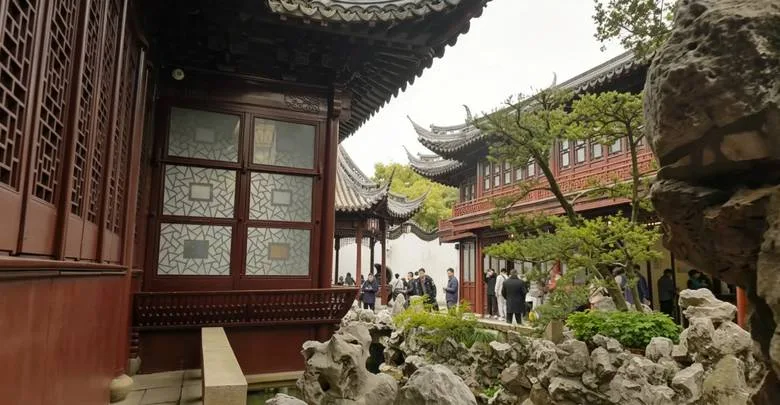
Now the old city, which is not old in the way European old cities are old. The walled town that stood here for 700 years was largely demolished in the 1990s and rebuilt as a commercial bazaar in faux-Ming style. Inside that bazaar, however, one thing is real: the garden.
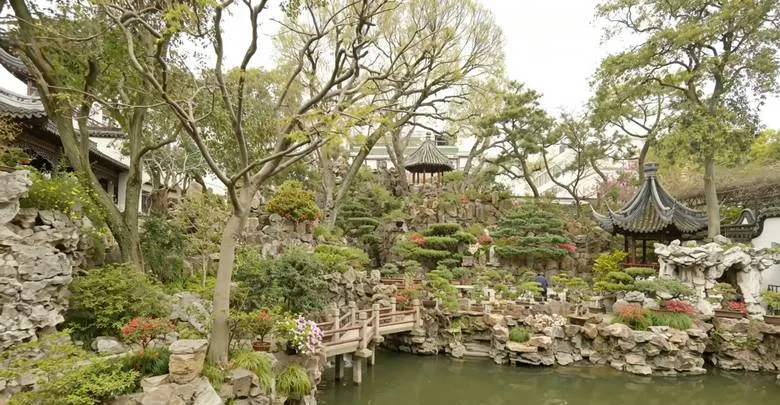
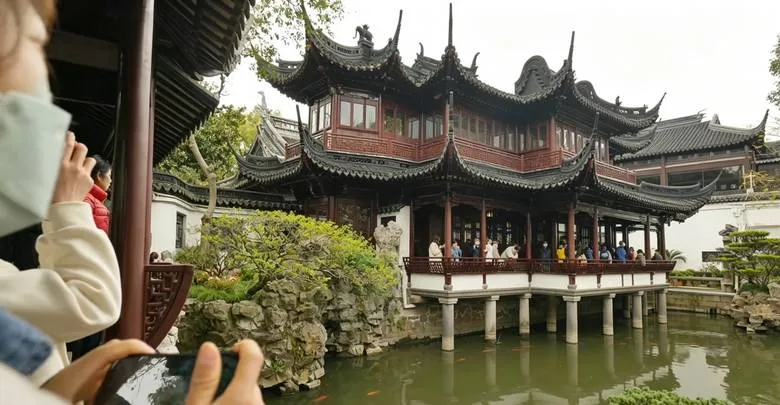
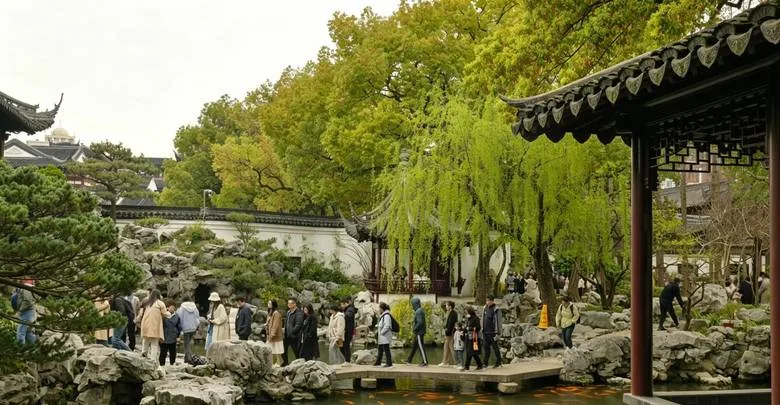
Yuyuan was built between 1559 and 1577 by a Ming official for his ageing father, and it is the only classical Jiangnan garden left in central Shanghai. It is small — two hectares — and it works by compression: rockeries you walk through rather than look at, corridors that turn so you cannot see the next courtyard, a dragon wall, a 400-year-old rock called the Exquisite Jade that a warlord tried to ship to his own garden and dropped in the river. Spend your time on the rockeries and the inner courtyards; the outer halls are mostly reconstructed.
What it feels like. Step out of the bazaar’s red-lantern noise and the garden closes over you. Somewhere a guzheng or guqin is playing — that slow, plucked, faintly reverb-drowned classical line you hear in every Chinese period drama — and because the courtyards are walled, the sound has nowhere to go and just hangs in the still air. Incense drifts from the side halls. For the first time all day nobody is trying to sell you anything, and the effect is physical: your shoulders drop. The garden was laid out in the 1570s so a retired official could sit quietly with his father, and 450 years later that is still exactly what it is for. Give it the late afternoon, when the tour groups have moved on to dinner and the only sounds are the music and the koi turning in the pond.
Two rules catch people out. It closes at 16:30, with last entry at 16:00 — which is why this stop is here and not later. And it is closed on Mondays.
¥40 (≈US$6) in April–June and September–November, ¥30 (≈US$4) otherwise; half price for students and over-60s. Book through the official Yuyuan mini-program or buy at the north or south gate — booking is recommended at weekends but not strictly required. 09:00–16:30. If your dates fall in the three weeks after Lunar New Year, the bazaar outside runs its lantern fair: spectacular, ticketed, and by 18:00 the nine-turn bridge is an hour's wait — go at opening.
16:40 — City God Temple and the bazaar
Free · until you get hungry
The temple itself is a working Taoist shrine, free to enter, open 08:30–16:30, and worth ten minutes for the smell of incense and the sight of local people actually praying rather than posing. The bazaar around it — the nine-turn bridge, the Huxinting teahouse in the middle of the pond, the lanterns — is at its best after 17:30, when the lights come on and the tour groups leave.
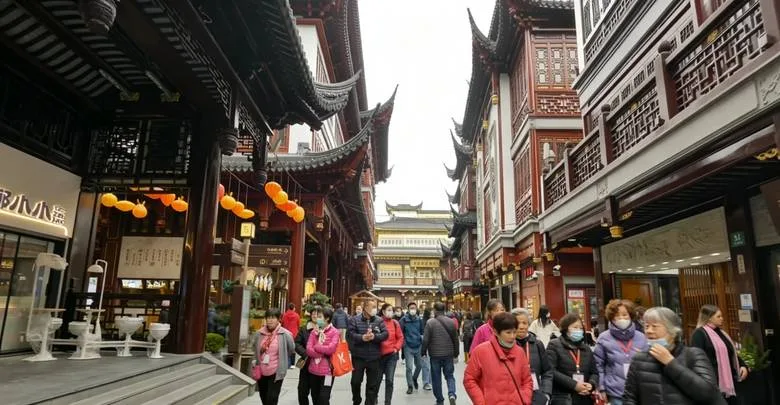
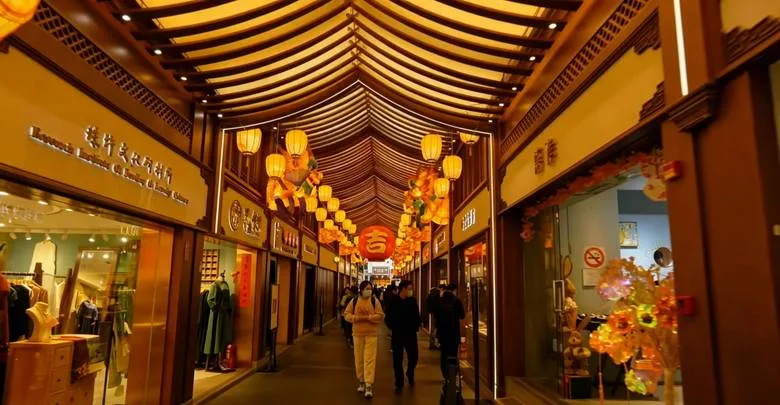
This is where you eat. The old city is the best place in Shanghai for the snacks the city is known for: xiaolongbao (soup dumplings) at Nanxiang Mantou Dian, crab shell pastry, smoked fish, sweet fermented rice. Expect a queue at Nanxiang; the branch upstairs costs slightly more and has no queue at all.
Temple free, 08:30–16:30. Bazaar free and open late. Dinner ¥60–120 (≈US$8–17) a head. The nine-turn bridge is a bottleneck at 18:00 — walk it an hour later. And buy nothing on the main lanes inside the bazaar: the snack stalls and the silk-and-pearl shops there charge two to three times what the same goods cost on the streets just outside.
Shanghai is often described as China’s most Western city. After today it looks more like a Chinese city that learned to be comfortable in borrowed clothes.
The workshop
1933 Old Millfun · Duolun Road · Tian’ai Road · Luxun Park · M50
What this day feels like. Almost no foreign visitor does this day, and that is precisely the argument for it. North of Suzhou Creek, in the old Hongkou district, Shanghai is neither polished nor poor. It is a working city with an industrial past, a literary history, and a lot of concrete.
You will spend the morning inside a 1933 slaughterhouse that has become the strangest building in Shanghai. You will walk a street where China’s most argumentative writers lived in the 1930s. You will cross a 500-metre road named after love, with couples writing their names on the pavement. You will end in a former cotton mill full of artists who mostly ignore you. Nobody will try to sell you a ticket. Almost nothing is in English. That is the day.
09:00 — People’s Square, as a launch pad
Free · 20 min
You are here for the metro, not the sights — but use the ten minutes. If the weather turns and you have a spare half-day, take Line 2 five stops east to the Shanghai Museum’s East Hall in Pudong: free, no booking, closed Tuesdays, and now the home of the bronzes and ceramics. The People’s Square building beside you is ticketed and shows only the Americas exhibition until late 2027. Otherwise: coffee, then underground.
10:00 — 1933 Old Millfun
Free · 09:00–20:00 · 75 min
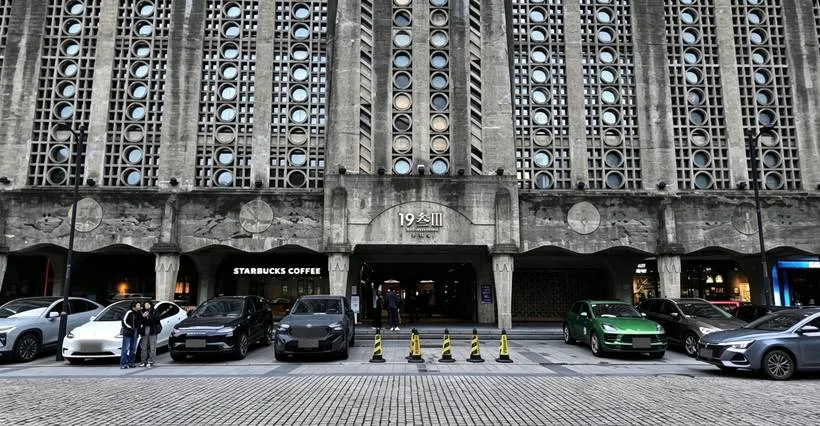
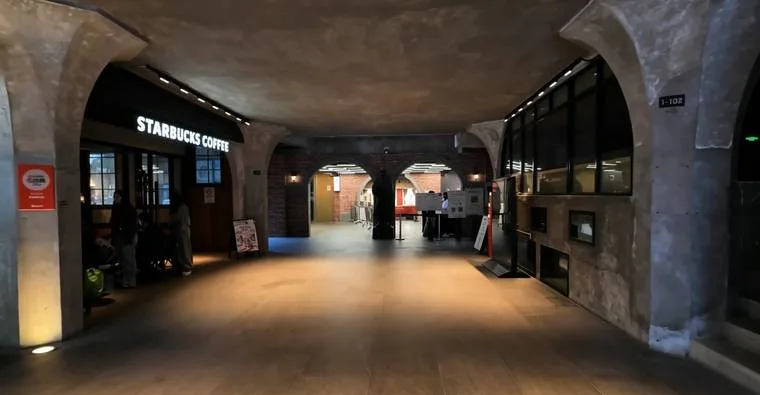
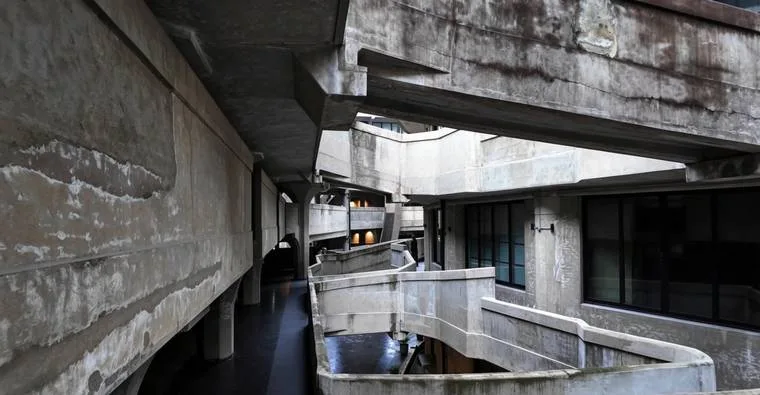
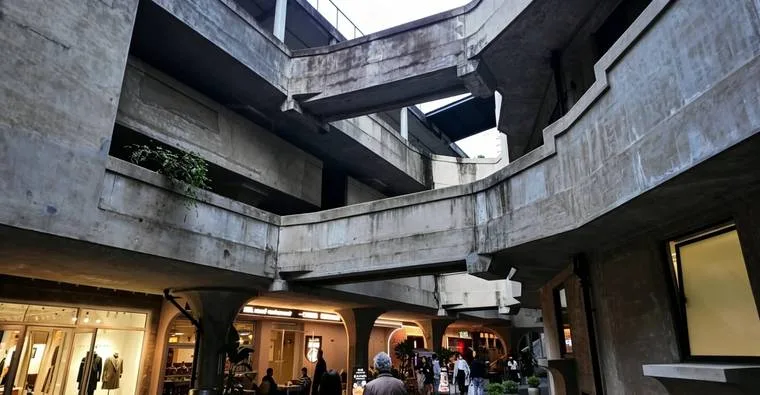
A British architect designed this as the largest slaughterhouse in the Far East, and it opened in 1933. The brief produced something extraordinary: a concrete building where cattle moved upward along spiral ramps and bridges, so that the animals walked to their death without ever going downstairs. The building closed in the 1970s, sat empty for three decades, and reopened in 2006 as a creative complex.
You walk the same ramps now. They are 1.5 metres wide, they turn constantly, and they connect at odd angles across a central atrium — the effect is of being inside a machine designed by someone who had read about machines but never seen one. Photographers love it. So do people who like abandoned buildings. Go straight up to the roof level first, then work your way down; the light comes in from the top.
No. 611 Liyang Road, Hongkou. Free, no booking. Line 10 is the closer of the two (Exit 2, 10 minutes' walk). Allow 75 minutes; 45 if you are not photographing.
11:40 — Duolun Road
Free · 75 min incl. lunch
A 550-metre street of 1920s villas and shikumen houses that was, between 1927 and 1937, the centre of Chinese literary life: Lu Xun, Mao Dun, Guo Moruo and Ding Ling all lived within a few hundred metres, largely because the concession police could not easily follow them here. The street is now a slightly tired cultural quarter — a few museums, a dozen shops selling jade and calligraphy, a concrete sculpture of a writer’s head.
Two things make the walk worth it. The Former Residence of Lu Xun (¥8 (≈US$1), closed Mondays, 09:00–16:00) is a small, unrenovated house with the writer’s desk, bed and books still in place — the least theatrical museum in Shanghai, and all the better for it. It is not on Duolun Road itself but on Shanyin Road, Lane 132, No. 9, which is the same street you are eating lunch on, five minutes east. And the Museum of Modern Chinese Literature at the north end, free, in a converted 1920s church, is genuinely good and almost always empty.
Eat lunch on Shanyin Road, the residential street one block east: wonton soup, a scallion pancake, a plate of braised pork. ¥30–50 (≈US$4–7).
Dongbaoxing Road is the closest station — closer than the Hongkou Football Stadium stop most Chinese guides list. Free street, no booking.
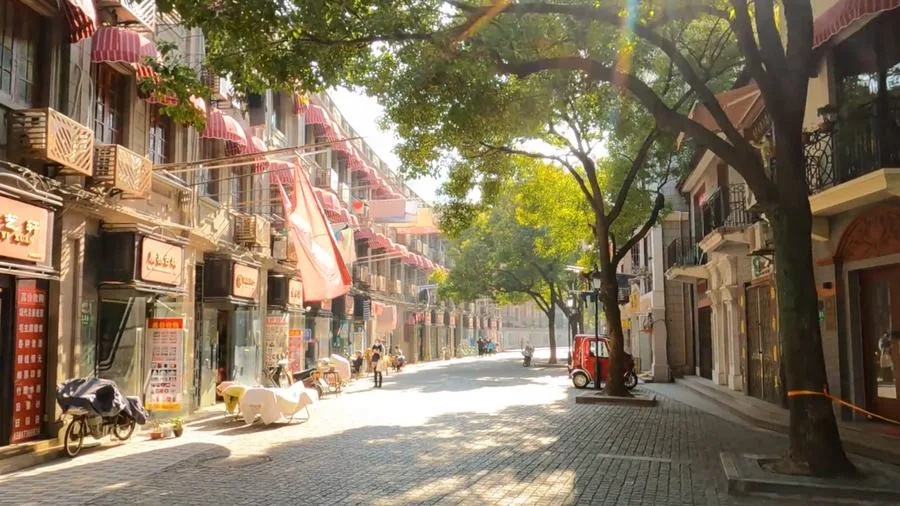
13:00 — Tian’ai Road, the road named after love
Free · 25 min
A 500-metre residential street with plane trees, low walls and a name that translates as “Sweet Love Road”. It has become a thing: couples write their names on the pavement in chalk, and the post office at the north end has a special postmark that people queue for on Valentine’s Day.
It is 25 minutes of walking, not an attraction. But it is the only street in the city where the romance is entirely homemade rather than built by a developer, and after 1933’s concrete it is a relief to be somewhere soft.
13:30 — Luxun Park
Free · 60 min
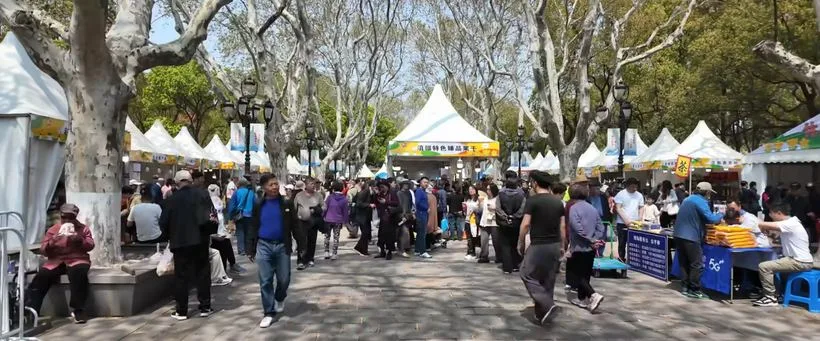
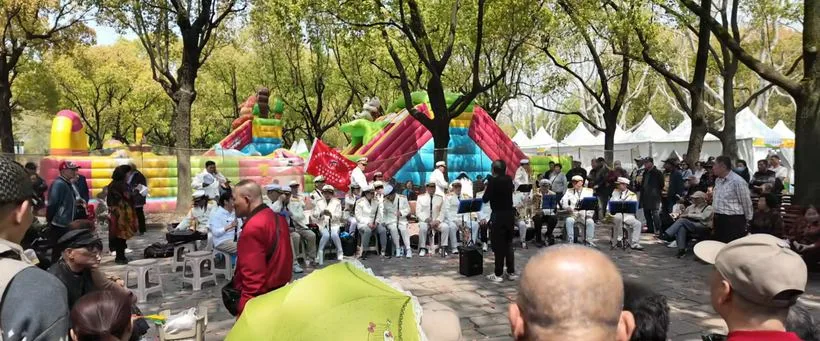
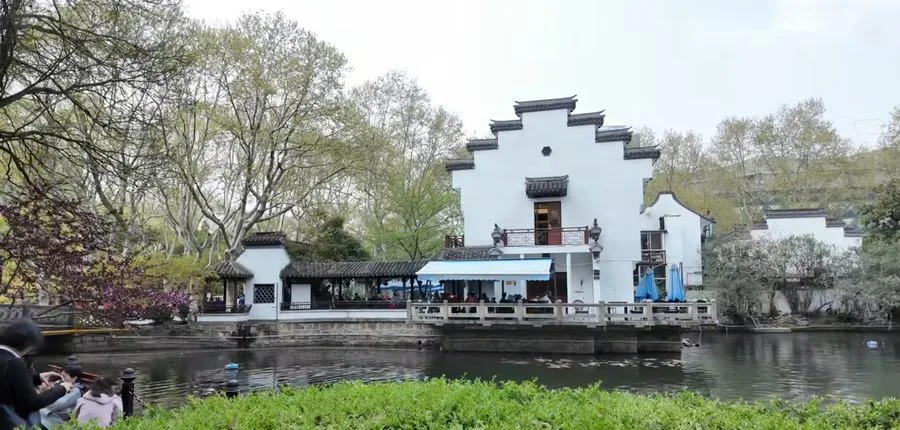
The city’s most ordinary great park, and the best place in Shanghai to see how people actually spend a Tuesday afternoon. Retirees dancing in formation to a portable speaker. Men playing Chinese chess on stone tables for hours. A woman singing full-opera arias to nobody in particular. A dozen different exercise machines, all in use.
One thing here is not a park at all. The Lu Xun Memorial Hall stands on the southern edge at Tian’ai Road, No. 200 — the street you have just walked: free, no booking, 09:00–17:00 with last entry at 16:00, closed Mondays. It is a national first-tier museum with 80,000 objects, including the manuscript of Old Tales Retold and the plaster death mask, and it is almost always empty. Twenty minutes inside explains everything you walked past this morning.
Lu Xun’s tomb is in the north part, under a plain slab — the writer who spent his life attacking Chinese complacency, buried in the middle of a park where people are enjoying themselves. It is a better monument than a statue would be.
15:00 — M50
Free · 90 min
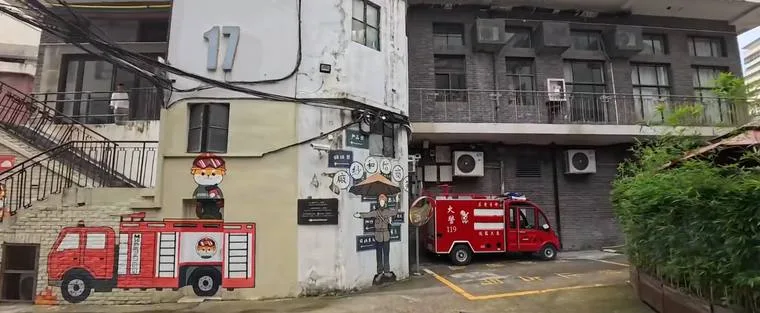
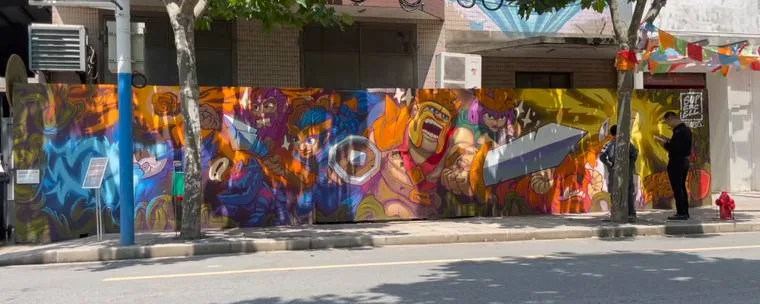
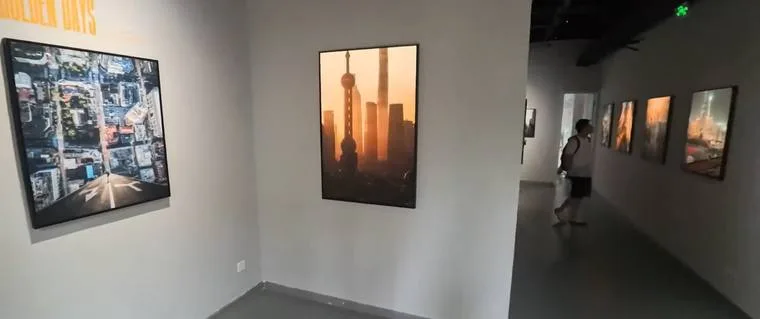
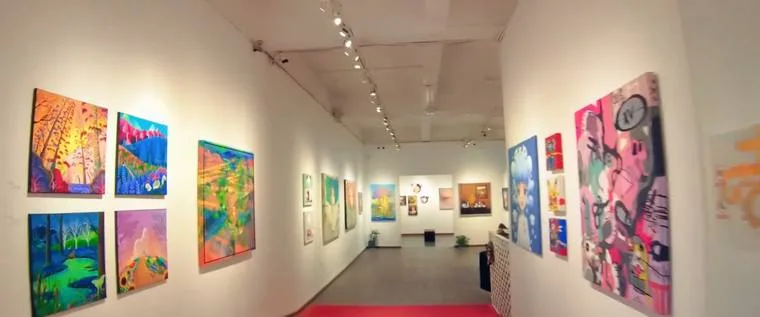
A 1930s cotton mill on Suzhou Creek that filled up with artists’ studios in 2000, when the rent was cheap and the ceilings were high. It has survived two property booms and one pandemic, and it is still working: about 100 studios and galleries in a set of brick and concrete blocks, some commercial, some not, all free to walk into.
Go on a weekday afternoon and you will see people actually making things. Go at the weekend and you will see students photographing graffiti. Either is fine. The galleries in Blocks 6 and 7 are the most interesting; ground-floor shops sell prints from ¥100 (≈US$14) and originals from ¥3,000 (≈US$417). And ignore the main corridor: the ground floor is the commercial layer — posters, prints, T-shirts — while the rooms worth walking into are on the second and third floors, behind doors with no sign on them.
No. 50 Moganshan Road, Putuo. Individual galleries keep their own hours and many close on Mondays. A DiDi from Luxun Park is about ¥20 (≈US$3) and 12 minutes; the closest metro is Line 13 Jiangning Road, a 10-minute walk, or Line 3/4 Zhongtan Road, about 15–20 minutes.
18:00 — Dinner in Jing’an
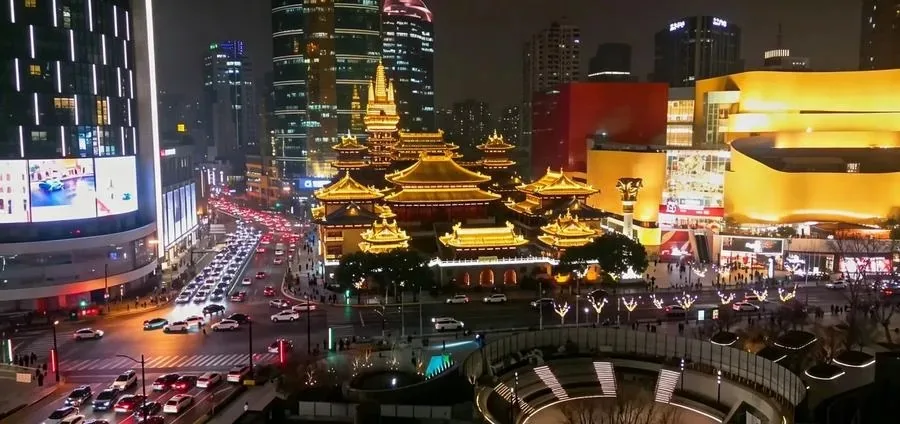
Take a DiDi to Jing’an Temple (¥25 (≈US$3), 15 minutes). The temple itself is a gold-roofed Buddhist compound wedged between office towers and a metro interchange, floodlit after dark and free to look at from the outside. Around it, Nanjing West Road has the densest concentration of good mid-range restaurants in the city — Shanghainese, Sichuan, Cantonese, Japanese, all within a 15-minute walk.
This is the right place to end three days: not at a viewpoint, but at a table, in a neighbourhood where people are eating dinner on a Wednesday.
What three days in Shanghai actually cost
Per person, excluding hotel and flights
All US dollar figures use an exchange rate of ¥7.2 ≈ US$1 and are rounded; the renminbi amount is what you will actually pay.
| Lean | Comfortable | |
|---|---|---|
| Metro and ferries | ¥40 (≈US$6) | ¥60 (≈US$8) |
| Paid attractions | ¥220 (≈US$31) | ¥500 (≈US$69) |
| Food | ¥450 (≈US$62) | ¥1,200 (≈US$167) |
| Coffee, snacks, water | ¥120 (≈US$17) | ¥250 (≈US$35) |
| Total | ¥830–900 (≈US$115–125) | ¥2,000–2,100 (≈US$278–292) |
Two observations. The cheapest day of this itinerary is Day 3, and it is also the best one — every stop is free. And the single biggest variable is whether you go up more than one tower. You do not need to.
One line is missing from the table above, because it varies more than everything else combined: the hotel. A good four-star room runs ¥450–750 (≈US$62–104) a night, and a river view on the Bund starts around ¥1,200 (≈US$167). The next section is about choosing that base, because it decides more of your three days than any ticket does.
Cash is almost unnecessary. Alipay or a contactless card covers everything here, including the ¥2 (≈US$0.3) ferry. Carry ¥200 (≈US$28) in small notes anyway, for the one machine that will be broken on the day you need it.
Where to stay: four bases, and which one this itinerary wants
Pick the base and half the transport problem disappears
Shanghai’s hotel map is really a metro map. Four areas cover almost every sensible choice for a three-day first visit, and the difference between them is not quality — it is what you want to be doing at 21:00.
| Base | What you get | What you give up |
|---|---|---|
| People’s Square Lines 1 / 2 / 8 | Walk to the Bund, Nanjing Road and Yuyuan; old restaurants and food streets on the doorstep | The most tourist-heavy corner of the city; smaller rooms for the money; street noise at night |
| The Bund / Shiliupu Lines 2 / 10 | The river at the door, the lights from the window, all of Day 1 on foot | Highest price per square metre; almost nowhere cheap to eat after 21:00 |
| Jing’an Temple Lines 2 / 7 / 14 | Densest restaurant and café cluster in the city; direct Line 2 to everywhere; locals rather than tour groups | 20 minutes from the Bund; you will always be riding home |
| Lujiazui Line 2 | Skyline from the window; Line 2 direct; malls underneath the building | Dead after 20:00 — no street life, no cheap food, and everything you came to see is across the water |
For this itinerary: Jing’an, then People’s Square. Jing’an wins on the shape of the three days — Day 1 starts two stops away on Line 2, Day 2 is two stops to Jiangsu Road and one on Line 11 to Jiaotong University, and Day 3 ends with dinner in the neighbourhood, so you walk home. People’s Square is the better pick if you would rather walk to everything on Day 1 and accept more noise.
The Bund is worth the money once — first trip, honeymoon, an anniversary — but read the room description carefully: a large share of rooms sold as “Bund view” face the back of the building next door. Ask for a floor above the eighth, facing the river, and get it confirmed in writing.
Lujiazui only if the view is the entire point of the trip. You will cross to Puxi for dinner every night, and after 21:00 Lujiazui is an empty business district with very good lighting.
Not every property in China is licensed to register foreign guests. International brands and most four-star domestic hotels are; small budget chains, guesthouses and many apartment rentals are not, and will turn you away at check-in with a shrug. Filter for "accepts foreign guests" when you book. Otherwise the only rule that matters: within 500 m of a Line 2 or Line 10 station is fine, more than a kilometre is not, however cheap it looks.
Where to eat, area by area
| Area | What to order | Where | Cost |
|---|---|---|---|
| Bund / Nanjing Rd | Scallion oil noodles, pan-fried pork buns | Yunnan South Rd, Fuzhou Rd side streets | ¥30–60 (≈US$4–8) |
| Lujiazui | Anything; the mall is the point | IFC basement, Super Brand Mall | ¥60–100 (≈US$8–14) |
| French Concession | Brunch, coffee, Yunnan-style rice noodles | Anfu Rd, Wuyuan Rd, Yongkang Rd | ¥80–150 (≈US$11–21) |
| Old city | Xiaolongbao, crab shell pastry, smoked fish | Nanxiang Mantou Dian, bazaar lanes | ¥60–120 (≈US$8–17) |
| Hongkou | Wonton soup, scallion pancakes, braised pork | Shanyin Rd | ¥30–50 (≈US$4–7) |
| Jing’an | Shanghainese home cooking, Sichuan | Nanjing West Rd back streets | ¥100–200 (≈US$14–28) |
Three things I would skip
The Bund Sightseeing Tunnel. ¥50 (≈US$7) for five minutes of fibre-optic lights. The ¥2 (≈US$0.3) ferry crosses the same river with a better view and actual people on it.
The second observation tower. Once you have seen the city from 546 metres, 263 metres is the same city with less of it. Spend the ¥199 (≈US$28) on dinner instead.
Nanjing Road after 19:00 on a weekend. It is the same street with four times the people. Walk it in the morning, as the itinerary does.
Was this guide helpful?
Frequently asked questions
Is three days enough for Shanghai?
Do I need to book tickets in advance?
Can I pay for everything with a foreign credit card?
Is this itinerary doable with children or a wheelchair?
What if it rains?
Do I need a visa for three days in Shanghai?
Where should I stay for three days in Shanghai?
Is the Bund better at night or in the day?
Last updated: 2026-10