What Is China Really Like in 2026? 9 Surprising First-Timer Moments
You arrive expecting one country and meet another. Nine real first-timer moments in China — arrival, an old woman's QR code, a 300 km/h train, a bowl of noodles at 11 pm — that change how travelers see the place.

The China You Think You Know
Crowded streets. A language you don’t speak. Shops that take cash. Internet that doesn’t work. Trains you can’t read. A low, steady hum of not being sure.
That’s the version most first-timers carry in their heads before the flight. It isn’t wrong, exactly — it’s just the trailer, not the film.
And then you actually arrive.
30 Minutes After Landing
You step off the plane still expecting everything to be difficult. Then you look up. Gate 12. Exit B. Metro. Taxi. Chinese first, English underneath.
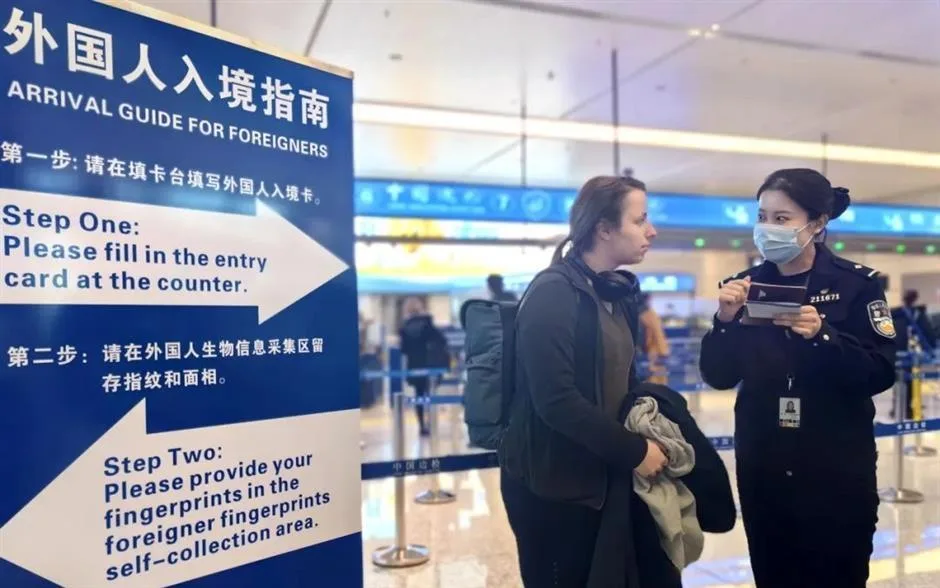
You haven’t spoken a word of Mandarin, and you’ve already found your way into the city. The help you were bracing for never shows up — because you don’t need it yet. Before you fly, it’s worth knowing whether you need a visa → and running the pre-trip checklist →.
The 80-Year-Old Grandma With a QR Code
You stop at a neighborhood shop for a bottle of water. The elderly woman in front of you pulls out her phone, scans a QR code taped to the counter, and pays. No cash, no fuss, no explanation needed. To her it’s just Tuesday.

Two days later, you’re doing exactly the same thing — phone up, beep, done — at a corner place where nobody speaks your language and it doesn’t matter. If you want the setup before you land, link a card to Alipay → or WeChat Pay →.
300 km/h, And Quieter Than Your Kitchen
You expected a train. Instead you get a quiet carriage, a tray table, your phone in hand, and the countryside moving past at a speed that doesn’t feel real. Someone’s asleep two seats down. The announcement is soft.

That’s when you check the little display above the door: you’re travelling at around 300 km/h. You only feel it when you look up from your screen. How the rail network fits together →.
The Meal You Didn’t Know How to Order
You point at something on the wall because you can’t read the menu. The server nods. You point at another thing. Why not.

Ten minutes later you’re staring at a table full of dishes you didn’t plan to order — and one of them, somehow, becomes the meal you tell your friends about when you get home. Eat your way across the regions →.
11 PM. A Bowl of Noodles. No Drama.
It’s late. The noodle shop is still open, steam on the window. People are walking home. Nobody is in a rush. You finish your bowl and walk back to your hotel, not hurrying, not watching your back the way you thought you would.

This is the moment you realize the city doesn’t feel as intimidating as you imagined. If safety is the thing sitting in the back of your mind, the longer version lives in our other intro →.
You Don’t Speak Chinese. Somehow, Lunch Still Happens.
You: a phone map. The owner: points at the menu. You: 👍. The owner: 🙂. Five minutes later, a hot dish lands on the table.
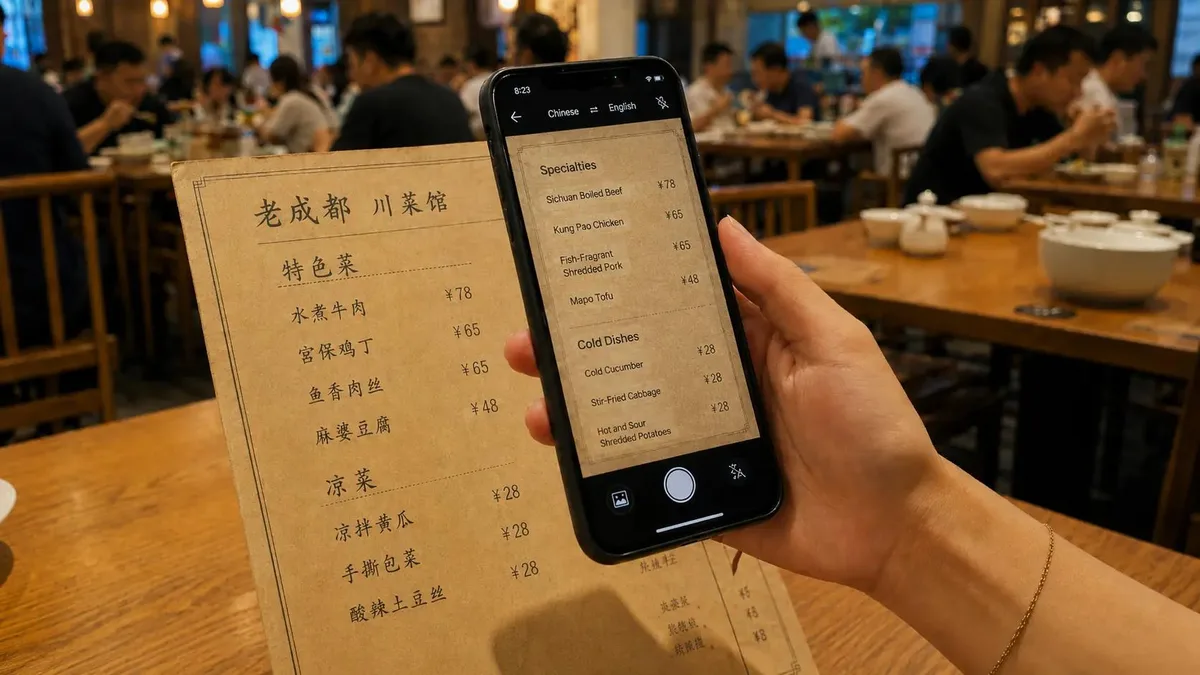
Somehow, you understood each other. Alipay and WeChat even translate inside the app, so ordering becomes a tap-and-show routine rather than a wall. In-app translation →.
Your Whole Trip Is Suddenly in Your Pocket
Your phone is your map. Your wallet. Your translator. Your train ticket. Your ride home. One morning you realize you walked out of the hotel with nothing but that and a charging cable.

At some point you stop thinking about how you’re doing it, and just do it. Getting online before you land is the one thing that makes the rest feel easy. Set up an eSIM or roaming →.
The China You’ll Actually Remember
You probably won’t remember every station number. You won’t remember which QR code you scanned. You may not even remember the name of that restaurant.

You’ll remember sitting in a tiny restaurant at 11 pm. You’ll remember watching the countryside disappear from a 300 km/h train. You’ll remember an old woman paying with her phone. You’ll remember realizing that the country in your head wasn’t quite the country you found.
That’s probably the China worth experiencing.
Frequently asked questions
What is China really like for first-time visitors?
Do you need to speak Chinese to travel around China?
Can tourists use mobile payments in China?
Will China feel difficult or overwhelming for first-time visitors?
Last updated: 2026-09