Winter in China: is it worth visiting, and where to go?
China has no shortage of beautiful winter destinations, and Jilin is a great one to consider in mid-winter (around January) — the season's most reliable peak: from late December to February two of its sights peak together — the river rime, at its thickest on Rime Island (Wusong Island) just outside the city, and the frozen Heaven Lake of Changbai Mountain. This ready-made 3-day Jilin itinerary for foreign visitors links both by high-speed rail so you can skip the planning and just show up for the snow. It is built for first-time visitors: each day has a timed schedule, costs shown in both RMB and USD, and practical booking notes. We assume you arrive in Jilin City and depart from Changchun, letting the train handle the long transfers. If you only have a few days in northeast China, this route packs the two headline winter experiences into one tight, low-stress loop.
Quick Answer
Is a 3-day Jilin winter trip doable for first-time visitors to China?
Yes — very doable. Fly or rail into Jilin City, wake early for the rime at Rime Island (or the free city river dyke), then take the high-speed train to Changbai Mountain to see the frozen Heaven Lake, waterfalls and open-air hot springs. Budget roughly ¥1,200–2,000 (≈$170–280) per person excluding international flights and depending on hotel choice, travel in late December to February, and book the high-speed rail, hotels and Changbai Mountain tickets (3 days ahead) well in advance. Everything below is step-by-step.
The two sights, in brief
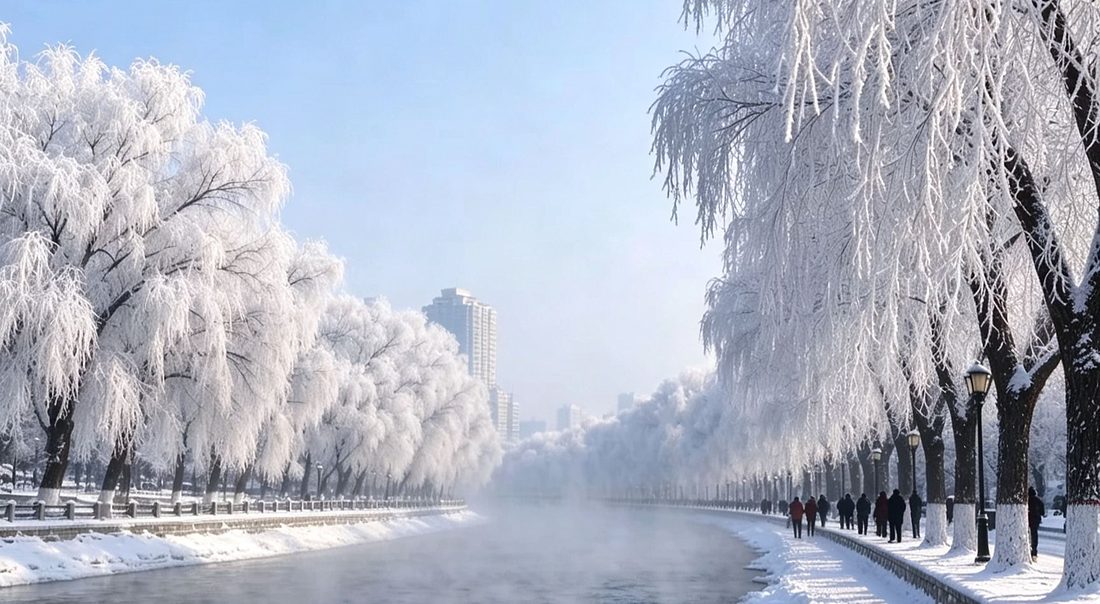
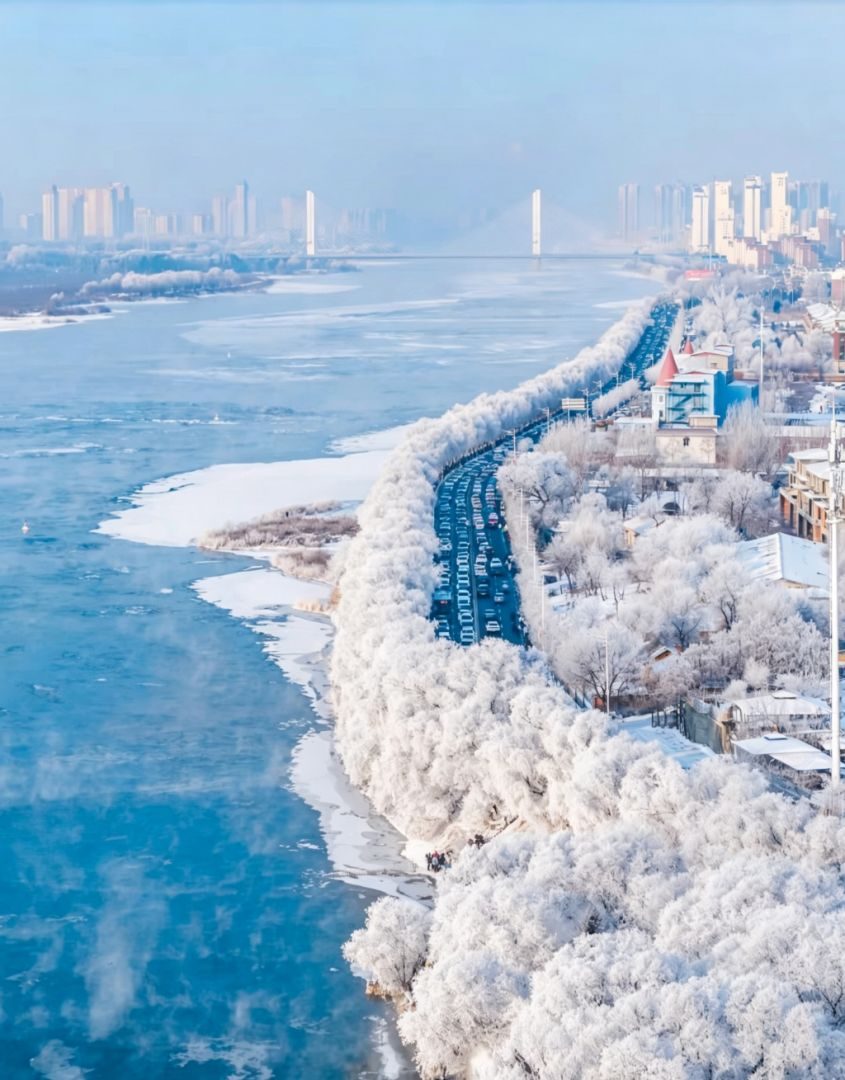
Jilin rime : counted as one of China's Four Great Natural Wonders — alongside Guilin's karst, the Yunnan Stone Forest and the Yangtze Three Gorges. On cold, calm winter dawns the riverside trees are clad in feathers of silver-white ice and the whole bank turns into a "silver forest." The cause is unusual: the Fengman Dam releases relatively warm water that keeps the Songhua River open all winter, so water vapour rises in the freezing air and freezes onto the branches. It is thickest and most magical just after sunrise in late Dec to Feb.
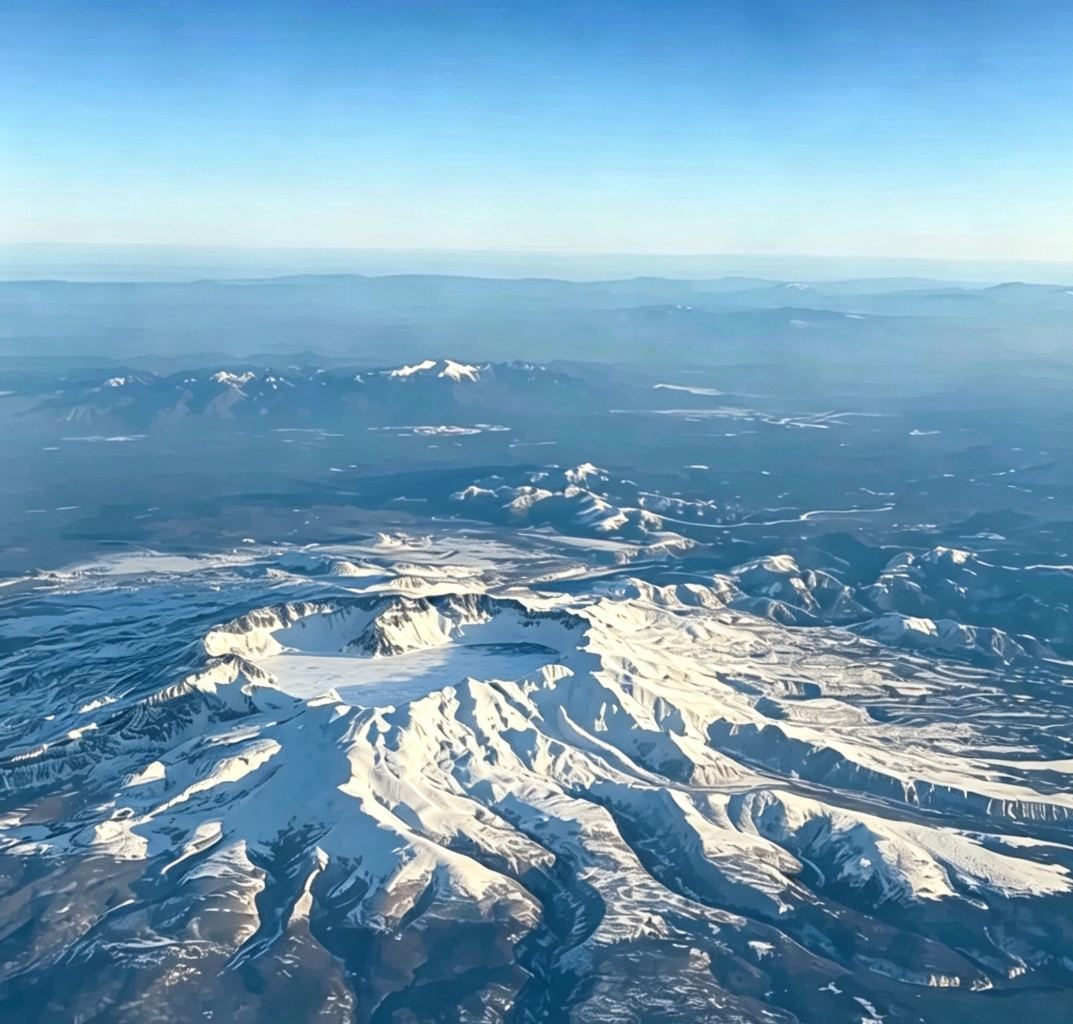
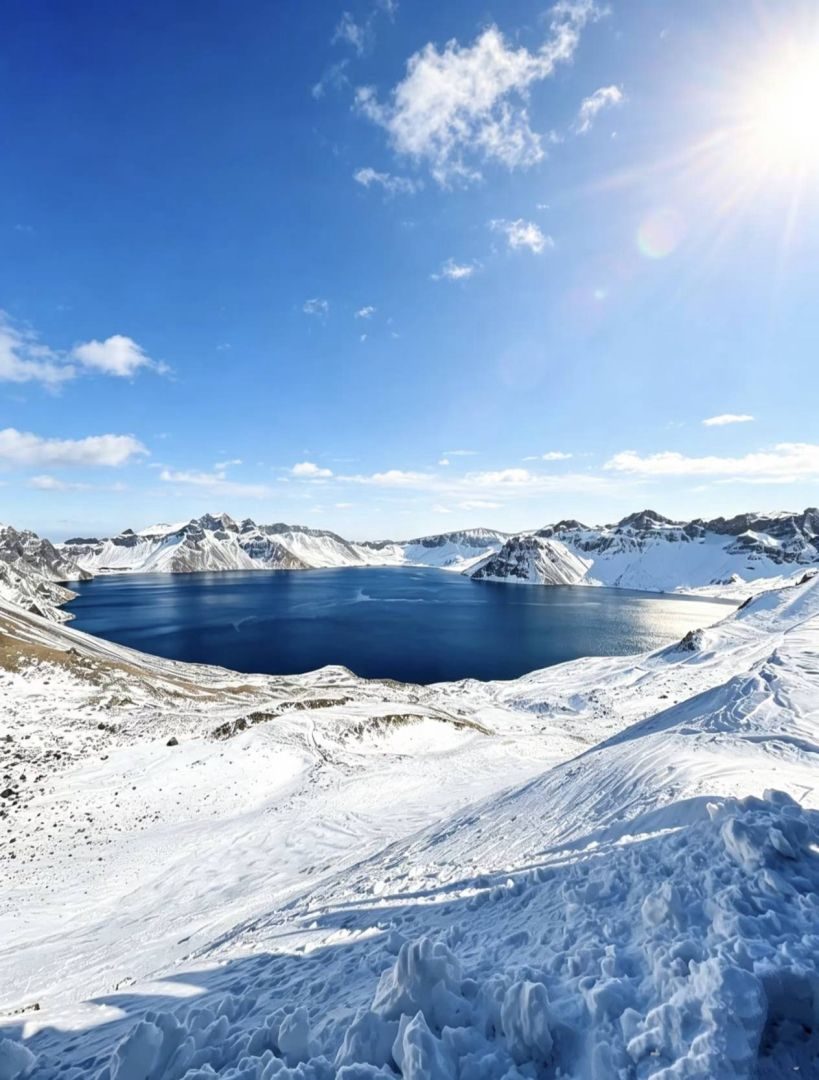
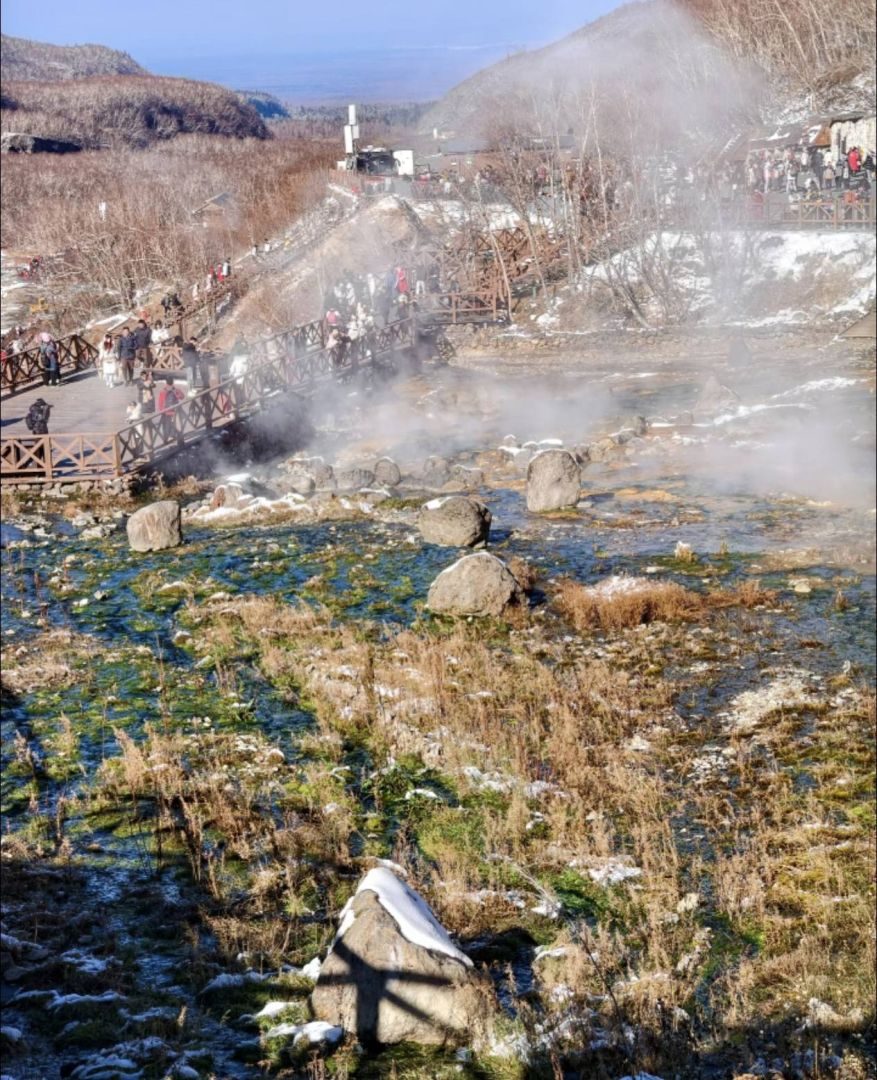
Changbai Mountain: a stratovolcano on the China–North Korea border and the highest peak in Northeast China (last erupted in 1702). At its summit sits Heaven Lake (Tianchi) — a crater lake that straddles the border and is sacred as the mythical birthplace of the Manchu people. Below the peak the mountain is a winter wonderland: snow-laden forests, the frozen Changbai Waterfall, steaming hot-spring groups and the Green-Deep Pool. It is cold, windy and spectacular.
Seeing the rime: best month, timing & weather
The rime is not guaranteed on every winter day — it depends on the month, the hour, and the weather. Plan around these three points so you don't travel all the way and miss it.
| Factor | What you need | Why |
|---|---|---|
| Best month | Late Dec to Feb | The river stays unfrozen all winter, but rime forms reliably only in the coldest weeks; other months rarely see it |
| Best hour | Around sunrise, ~6:30–9:00 AM | Ice is thickest and clearest at first light; by late morning it melts or blows away — the later, the poorer |
| Weather | Clear and calm, around −20℃ or below, with humid river air | The Fengman Dam keeps the water above freezing → vapour rises → freezes on branches; wind, snow or a thaw ruin it |
How to check the rime forecast (and why it matters): watch the Jilin City meteorological releases for the local "rime forecast", ask your hotel front desk, and look for on-site rime alerts. The forecast also gives a star rating (usually 1–5 stars) for the expected intensity. Go when it's 3 stars or above — that's when the trees coat heavily and photos pop; 5 stars is the best show. Below 3 stars the rime is usually thin or patchy, so Option B (city riverside) may be enough while Option A (Rime Island) is best saved for a higher-rated morning. Because the ice forms overnight, always reconfirm the morning you plan to go — a "no-rime" morning is common.
Where to see the rime — we recommend Rime Island (Option A), with a free city alternative (Option B):
A. Rime Island (Wusong Island) — an island in the Songhua River by Wulajie town; the classic, densest, most photogenic rime.
Pros: thickest, most reliable "silver trees", best for photos.
Cons: needs an early start and the ferry crossing, still weather-dependent.
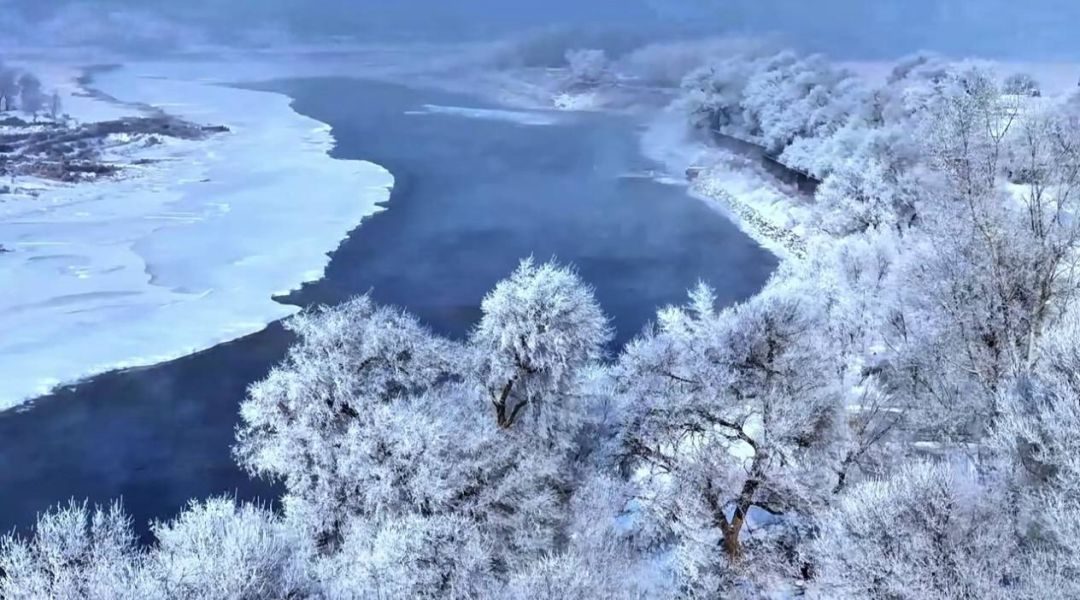
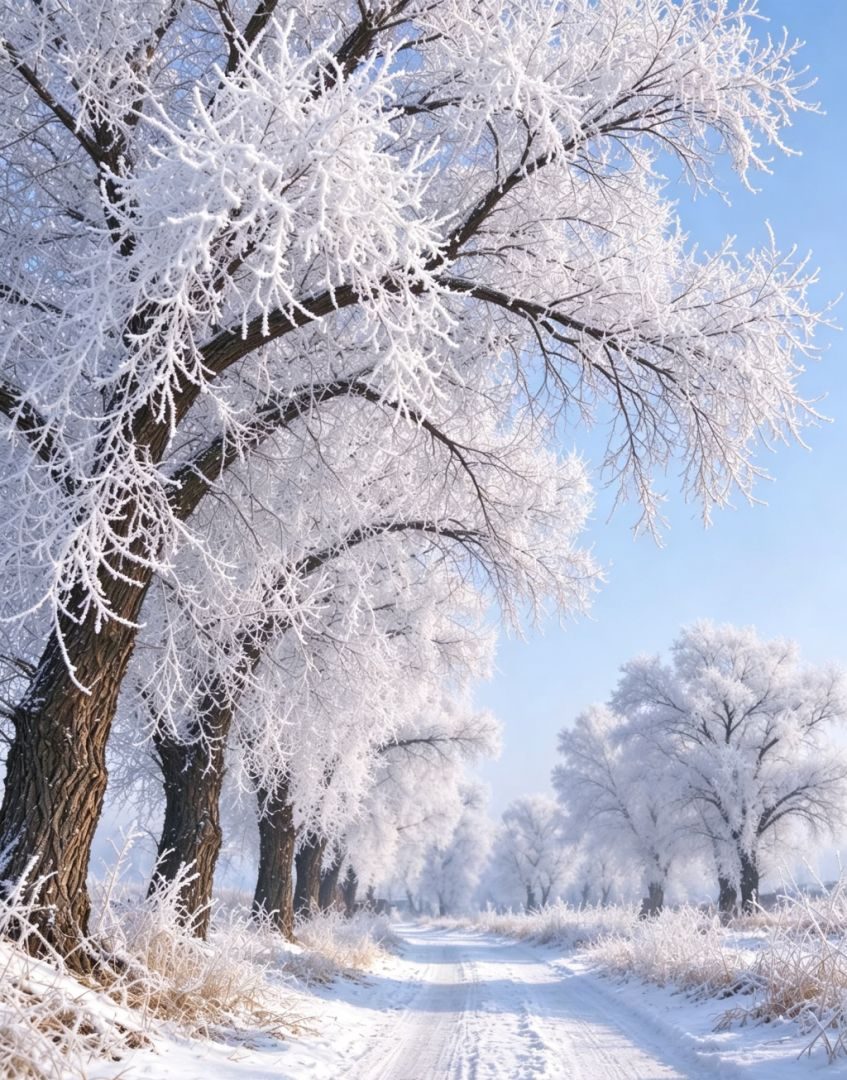
B. City riverside (free, easy) — along Songjiang Road's "Ten-Li Dyke" between Linjiangmen and Jilin bridges, or the Asihada Rime Corridor a few km south of town. Both are free and walkable from the city.
Pros: free, no hired car, walk out from your hotel.
Cons: rime is thinner and less reliable — more "frost on a few trees" than a full silver forest; best only on a high-star morning.
Month by month: December 2026, January and February 2027
All three months work, but they are not the same trip. Late December hands you the season's first rime with the thinnest crowds, January is the coldest and the most reliable, and February trades a little reliability for the Spring Festival holiday — which falls on 6 February 2027 and turns the first half of the month into the busiest stretch of the winter.
| Month | Rime at Rime Island | Changbai Mountain | Crowds & prices |
|---|---|---|---|
| Late Dec 2026 City −8 to −20℃ | Season opens in the last week or two; 2–3-star mornings are normal, thin frost on milder days | Snow is reliable and the north slope is running; the summit road opens on calm, clear days | Quietest of the three — cheapest hotels, easy train seats, no need to book the rime car far ahead |
| January 2027 City −15 to −25℃ | Peak month: coldest air, thickest rime, best odds of a 4–5-star morning | Coldest and snowiest; Heaven Lake shuts more often on wind, blizzard and fog days | Busy around New Year's Day, calm again mid-week; book Changbai tickets about 3 days out |
| February 2027 City −8 to −20℃ | Strong into mid-month, then thins as the river starts to warm; late-February mornings are a gamble | Open all month and often sunnier; still −25℃ and windy on the rim | Spring Festival (6 Feb) and the chunyun rush: HSR seats and Chiabei hotels sell out weeks ahead |
Plan around the Spring Festival, not through it: Chinese New Year falls on 6 February 2027, and the 40-day travel rush around it starts in late January. Trains to Changbai Mountain Station and the Chiabei (Erdaobaihe) hotel strip fill weeks in advance, and prices peak for the holiday week. If your dates are flexible, come before roughly 20 January or aim for the second half of February — same snow, far fewer people.
Before you start: stay in Jilin City the night before
Whichever rime option you pick for the morning, the key is the same: spend the night before in Jilin City, keep an early night, and be ready to be out before 6 AM. If you go with Option A (Rime Island), book the ~05:00 dawn car the evening before — there is almost no public transport at that hour, so arrange it while still in the city (ask your hotel to book a driver, or use DiDi), confirm the pick-up time and meeting point in writing, and carry cash for the small ferry booths. For Option B (city dyke), no car is needed — just set an early alarm. How to reach each spot is in the Day 1 morning schedule below.
Day 1 — Rime Island rime & transfer to Changbai Mountain
The rime forms overnight on cold, calm winter nights and looks its best around dawn. This morning we'll go to see the rime. Then spend the afternoon on the high-speed rail to Changbai Mountain and soak in a hot spring at night.
Morning: Rime Island (recommended) or the city dyke
| Option | Time | Activity | Cost | Notes |
|---|---|---|---|---|
| A | 05:00–06:00 | Commute: hired car to Rime Island pier | Hired car round trip ≈ ¥150–250 (≈$20–35) | 05:00/DiDi Pre-book ~05:00 car the evening before |
| 06:00–09:00 | Play: ferry across → riverside silver trees → villages | On-site entry/ferry ≈ ¥60–80 (≈$8–11) in peak season (Dec–Feb); ~¥30 low season, set by local operator | no online booking — pay at pier/gate, dawn cars scarce so arrive early & carry cash | |
| B | 05:45–06:00 | Commute: taxi to the riverside dyke | Taxi ~15 min (¥15–30 ≈ $2–4) | then walk to view |
| 06:00–08:30 | Play: Songjiang Rd Ten-Li Dyke / Asihada corridor walk | Free riverside, no ticket | Free; thinner rime, best on high-star mornings |
Bring trail food for the early start: the rime outing leaves before dawn, often before breakfast. Pack snacks — chocolate, nuts, a thermos of hot water — to nibble while you view the rime and keep your energy and core temperature up in the −20℃ cold.
After the rime, wander around the city, enjoy the riverside views, and try a local breakfast specialty; then return to your hotel around 11:00 to check out and take a taxi to the HSR station.
Afternoon: rail transfer to Changbai Mountain
| Time | Activity | Cost | Notes |
|---|---|---|---|
| 11:00–12:00 | Check out, taxi to HSR station | Taxi ~20 min (¥15–30 ≈ $2–4) | — |
| 12:00–14:00 | HSR: Jilin Station → Changbai Mountain Station | HSR 2nd class ¥98 (≈$14), ~1 h 35–1 h 50 (as of 2026/27 winter) | Arrive Changbai Mountain Station (Chiabei), daily direct trains run (roughly every 1–2 h) — pick a morning departure and book ahead; check exact timetables on 12306 for your travel date |
| 14:00–15:30 | Check in at Chiabei & drop bags | Taxi from station ~20 min (¥20–50 ≈ $3–7) | Chiabei (Erdaobaihe) is walkable — riverside promenade, cafés and the "forest town" streets; no ticket needed |
| 15:30–17:00 | Wander the nearby town or take a riverside stroll | Free | A calm evening after the long travel day; pick up a few trail snacks for the days ahead |
| 17:00–19:00 | Dinner in Chiabei | Meal ~2 h | Food clusters in Chiabei — try hotpot or northeast specialties; recharge before the evening hot spring |
| 19:00–21:00 | Open-air hot spring | Hotel / hot-spring centre | Soaking in the snow is Changbai's signature winter experience |
Day 2 — Changbai Mountain north slope: Heaven Lake, waterfalls & hot springs
Spend a full day on Changbai Mountain's north slope, then stay overnight in Chiabei (Erdaobaihe).
Morning — north-slope route: a shuttle bus plus a peak bus takes you up to Heaven Lake, then down past the frozen Changbai Waterfall, the steaming Julong hot-spring group and Green-Deep Pool — all in one winter morning.
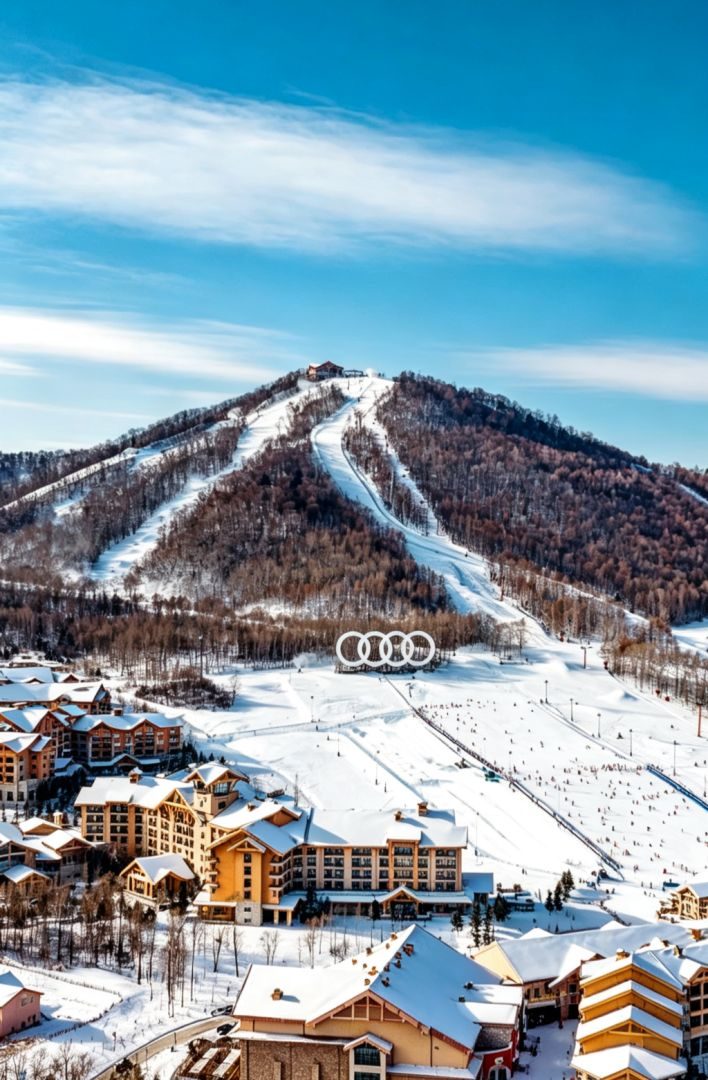
Afternoon — your pick of signature winter fun: skiing at the Wanda resort, or a stroll around Erdaobaihe; then a relaxed late-afternoon in town before dinner at 17:00–19:00.
Evening — open-air hot spring: soak in the snow at an open-air hot spring (Changbai's signature winter experience), then turn in at your Chiabei hotel.
Heaven Lake can close at short notice: in high wind, blizzard or dense fog the scenic area may suspend the peak bus and close the Tianchi viewing platforms for safety. Check the official Changbai Mountain announcements (WeChat mini-program / official account, or the boards at the entrance) the evening before and again that morning. Go up early and keep the day flexible — if the summit is shut, do the waterfall, hot springs and Green-Deep Pool first and try again later. Refunds or rebooking follow the scenic area's rules that day.
Schedule
| Time | Activity | Cost | Notes |
|---|---|---|---|
| 07:30–08:00 | Commute: to the north-slope entrance | Taxi ~20–40 min (¥20–40 ≈ $3–6) or scenic shuttle, ~20–30 min | The north slope is the most developed — best for a first visit; Changbai Mountain tickets are best booked about 3 days ahead |
| 08:00–12:30 | Play: Heaven Lake, Changbai Waterfall, hot-spring group, Green-Deep Pool | Scenic shuttle + walking, ~4.5 h; itemised entry ≈ ¥105 + shuttle ¥85 + Tianchi peak bus ¥80 ≈ ¥270 (≈$38)/person (official north-slope combo; ~¥295 via Pool-North transfer centre) | advance booking required via the official Changbai platform, bring ID for real-name entry |
| 12:30–13:30 | Lunch (~1 h) | Meal ~1 h | Eat in the scenic area or Chiabei |
| 13:30–15:30 | Play: skiing (Wanda) or a stroll in Erdaobaihe | Around Chiabei, ~2 h; skiing lift ticket ≈ ¥128 up (own board, weekday) to ¥298 (holiday), ~¥228 with gear; peak weeks ¥300–600/day | A signature Changbai winter experience; book ski tickets online ahead, as early as possible for peak weeks |
| 15:30–17:00 | Free time: back in Chiabei — stroll the town, riverside walk or a café break, and stock up on trail snacks & warm gear to prep for the evening hot spring | Walk or short taxi ~20 min (¥10–25 ≈ $1.5–3.5) | A good window to buy next day's trail food (chocolate/nuts/thermos of hot water) and wander Erdaobaihe's "snow-forest town" |
| 17:00–19:00 | Dinner in Chiabei | Meal ~2 h | Food clusters in Chiabei — try hotpot or northeast specialties; recharge before the evening hot spring |
| 19:00–21:00 | Play: open-air hot spring | Hotel / hot-spring centre | Soaking in the snow is Changbai's signature winter experience; many hotels include the spring in the room rate, while standalone centres charge ¥80–200 separately — confirm at booking |
Day 3 — Unfrozen-river drift & return to Changchun
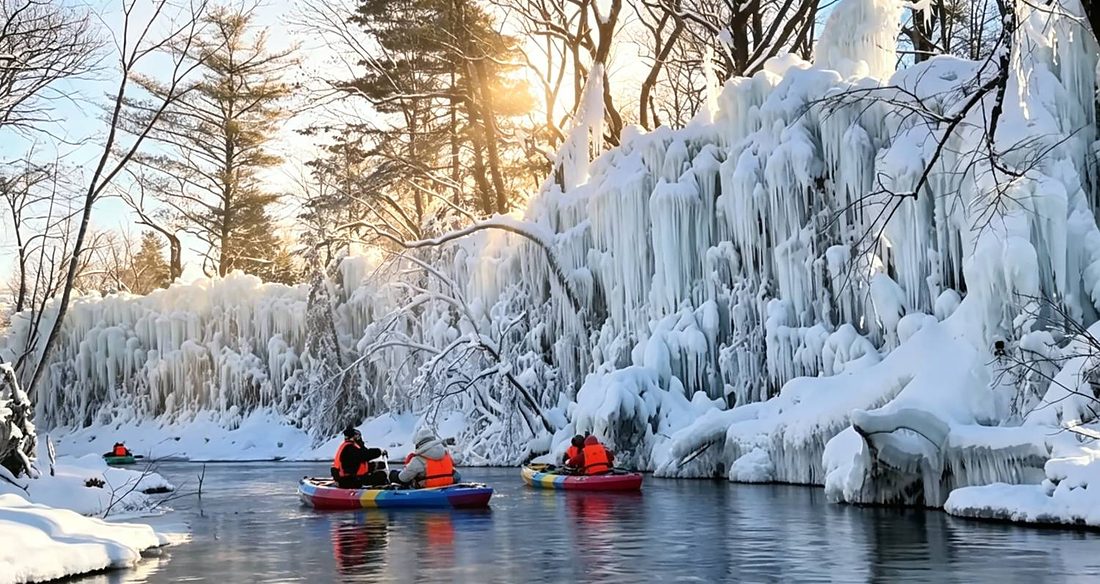
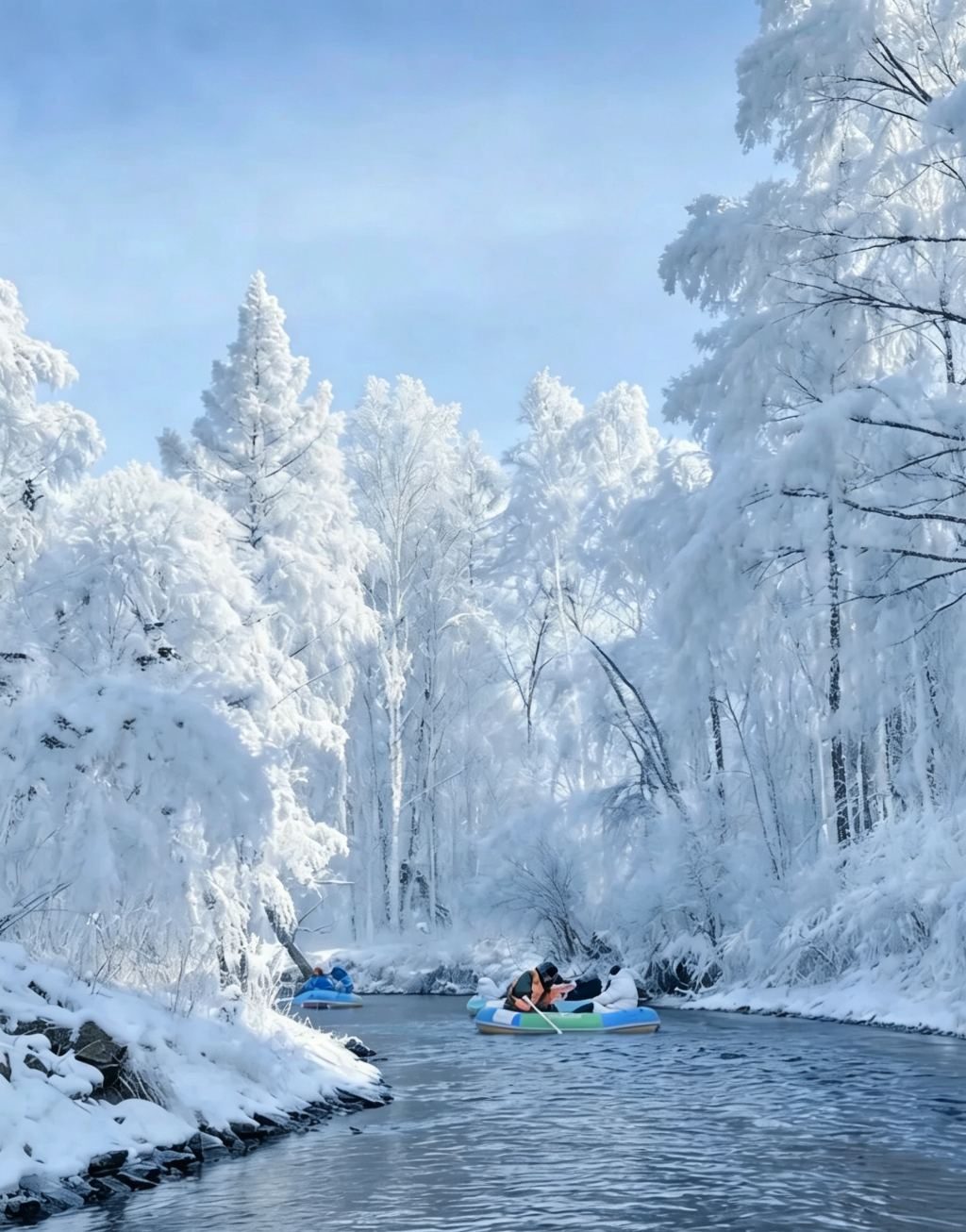
On your last morning, do the signature unfrozen-river drift (Mojie) along the never-freezing Erdaobaihe, then take the high-speed rail back to Changchun to connect with your flight.
Schedule
| Time | Activity | Cost | Notes |
|---|---|---|---|
| 07:00–09:00 | Commute + play: taxi ~30 min from Chiabei to Mojie, unfrozen-river drift at dawn | Taxi from Chiabei ~30 min (¥20–40 ≈ $3–6); private operators ≈ ¥150–200/person (≈$21–28) incl. shuttle, ticket from ¥55 | Rime is fullest at dawn; drifting a never-freezing river feels surreal; no official booking — reserve a day ahead via the operator or your hotel; queues can be long at dawn, so bring trail food (chocolate/nuts/thermos) to snack on while you wait |
| 09:00–10:00 | Return to Chiabei, breakfast (~1 h) | Drive ~30 min (¥20–40 ≈ $3–6); meal ~1 h | Hot noodle soup warms best |
| 10:00–10:30 | Commute: collect luggage, head to Changbai Mountain station | Taxi ~30 min (¥20–50 ≈ $3–7) | — |
| 11:00–14:00 | Commute: HSR Changbai Mountain → Changchun | HSR ~2.5–3 h (as of 2026/27 winter) | Arrive Changchun/Longjia; daily trains roughly every 1–2 h — pick a late-morning departure and pre-book, check exact timetables on 12306; allow ample transfer time for CGQ flights; book HSR ticket ahead on 12306 for your date |
| 14:00– | Arrive Changchun — depart or continue | — | For CGQ flights, allow 2–3 h to transfer |
Best time to visit & what to pack
The rime and snow season runs late December to February. For the best rime, target clear, calm nights below -20°C. Changbai Mountain is colder and windier than the city — dress for it.
Pack: thermal base layers, insulated down jacket, waterproof grip boots, hat, gloves, face mask, lip balm, and a power bank (cold drains phone batteries fast). Set up eSIM / roaming and Alipay before you fly.
FAQ
When is the best time to see the rime in Jilin?
Late December to February, on cold, calm mornings just after sunrise (roughly 6:30–9:00). The rime is weather-dependent and the city rates it with stars — go on a 3-star morning or better. Rime Island gives the thickest rime; the free city dyke is the easy fallback if you don't want a 5 a.m. drive.
When does the rime season start in Jilin?
The reliable window opens in the last week or two of December and runs into late February. Thin rime can form on a cold snap from late November, but early December is usually mild enough that you get frost on a few branches rather than a silver forest. If your dates are fixed before mid-December, treat rime as a bonus and give yourself two mornings.
Can I see Heaven Lake (Tianchi) on Changbai Mountain in winter?
The north slope stays open, but Heaven Lake often shuts on short notice — high wind, blizzard or thick fog and the scenic area suspends the peak bus and the viewing platforms. Check the official Changbai Mountain announcements (WeChat mini-program or the boards at the entrance) the evening before and again in the morning, go up early, and treat a clear view as a bonus rather than a guarantee.
Is January a good time to visit Changbai Mountain?
Yes — it's the most reliably snowy month, and the north slope (Beipo) runs all winter. Expect −20℃ to −30℃ on the mountain, and accept that the summit road closes to Heaven Lake more often in January than in a milder month. The west slope keeps its gorge and snow-valley areas open but does not run the Heaven Lake climb in winter, so the north slope is your route to the rim. Winter ticket checks run roughly 08:00–13:30, so start early.
How many days do you need for Jilin and Changbai Mountain?
Three days is the workable minimum: one dawn for the rime, one full day on Changbai's north slope, one morning for the drift and the train out. Four or five days lets you add a second rime morning — where two tries roughly double your odds of a good one — or a ski day at Beidahu or the Wanda resort. With only two days, pick one of the two sights and do it properly.
How do you get from Jilin City to Changbai Mountain by train?
Direct high-speed trains run from Jilin Station to Changbai Mountain Station (Chiabei) in about 1 h 35 to 1 h 50, second class ¥98 (≈$14) as of the 2026/27 winter; several leave through the day, mostly as through trains from Changchun. A few itineraries connect at Dunhua with a 20–30 minute change, which works out to about 2 hours. Book on 12306 or Trip.com, and allow 20–30 minutes by taxi from the station to the Erdaobaihe hotel strip.
Do I need a visa to visit Jilin as a foreign tourist?
Most visitors need a Chinese visa, or qualify for visa-free transit or the 240-hour visa-free entry depending on nationality and route. Rules change, so check the current policy before booking — our visa guide covers the options.
Can I do this itinerary without speaking Chinese?
Yes. Set up Alipay, DiDi and a translation app before you fly, download offline maps, and book high-speed rail through Trip.com. Big stations are bilingual; Rime Island's ferry booths and the small drift operators are not — have the Chinese names ready to show.
How cold does it get, and what should I wear?
Daytime is often -10°C to -25°C, and Changbai Mountain is colder and windier. Wear thermal base layers, an insulated down jacket, waterproof grip boots, hats, gloves and a face mask. Indoor heating is strong, so dress in layers.
Related Guides
Written by the FeelingChina Travel Team · Updated: November 2026. Facts reflect the 2026/27 winter season and may change — verify train schedules, Heaven Lake opening status, ticket prices and visa rules before you travel. This guide focuses on the Jilin rime — we recommend Rime Island, with the free city river dyke as an easy alternative — and Changbai Mountain.